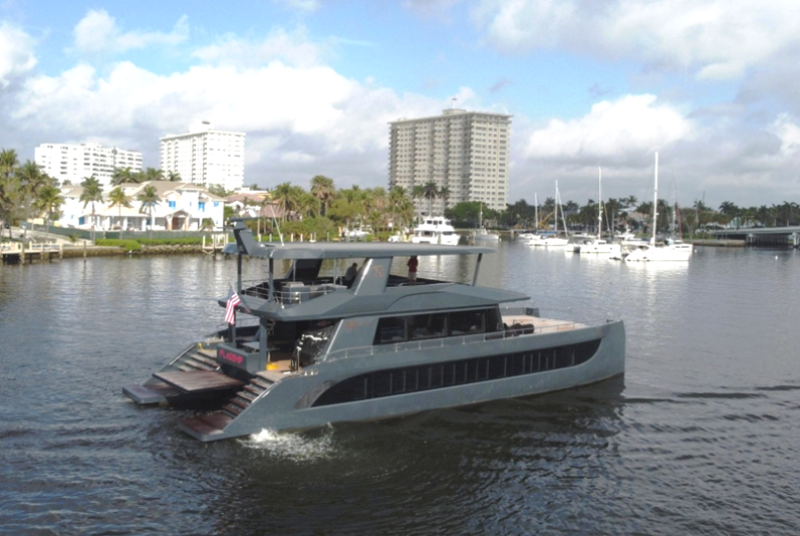
Flagship was an eighty-foot motor yacht, lost in Miami in a fire on 28 April, 2024. The fire was so fierce that the first responders had to call for more assistance. At the end of the day 34 units, and 100 firefighters were unable to prevent the total loss of the vessel. But did lithium-ion batteries write off ‘Flagship’ in a Miami shipyard? Or was it something else?
Early Warning Signs of a Lithium-Ion Battery Fire
The heat was intense. The firefighters faced low visibility and billowing smoke. However, they got the flames under control after they moved Flagship away from other vessels, and closed a neighboring bridge. Despite this, the interior of the vessel with accommodation for eight guests across four staterooms was destroyed.
The Superyacht media channel confirms that Flagship had solar panels on the roof, and a number of storage batteries below. They quote a senior firefighter observing, “So that is obviously fueling the flames. Although we were able to remove it from the coverage structure into the open area.”
There was not much fuel on the vessel. It had a sprinkler system that helped dampen the heat. Back then, it was not clear whether lithium-ion batteries wrote off Flagship. But if they did not, then what else caused the fire to break out and spread so rapidly?
NTSB Suggests Lithium-Ion Batteries Destroyed Flagship
The National Transportation Safety Board (NTSB) announced its findings in a report that we link to below. They confirmed the fire broke in the mid-morning, when nobody was aboard.
Shoreside firefighters moved Superyacht to a nearby embankment, they continue, where it sank after they extinguished the fire. They must have pumped a lot of water into the steel hull, which was a $5 million total loss.
NTSB confirms that the likely cause, “was the thermal runaway and explosion of the 24-volt lithium-ion battery bank, due to the inoperable battery management systems”.
The Board understands that a portable battery charger was in use at the time the fire broke out, “which compromised the safe monitoring of the vessel’s lithium-ion battery systems”. So now we know how lithium-ion batteries probably wrote off Flagship. Perhaps they over-charged them?
More Information
Battery Management System Fundamentals
Cloud-Based Battery Management System