Some lithium-ion batteries provide safer lithium-ion oxygen release than others, although most consumers may be unaware of the difference. Lithium-ion batteries are not all the same, although they do operate on similar principles, and look similar except for the label.
The difference is that the safer ones use different cathode materials to store lithium ions inside their cases. These materials influence how they behave if they overheat, and enter a thermal runaway phase.
How Does Safer Lithium-Ion Oxygen Release Work?
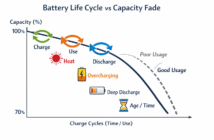
Thermal runaway is a self-sustaining reaction inside a battery case, caused by excessive heat, physical damage, manufacturing defects, or overcharging the battery. When the temperature increases to a critical point, the battery’s internal components begin to break up.
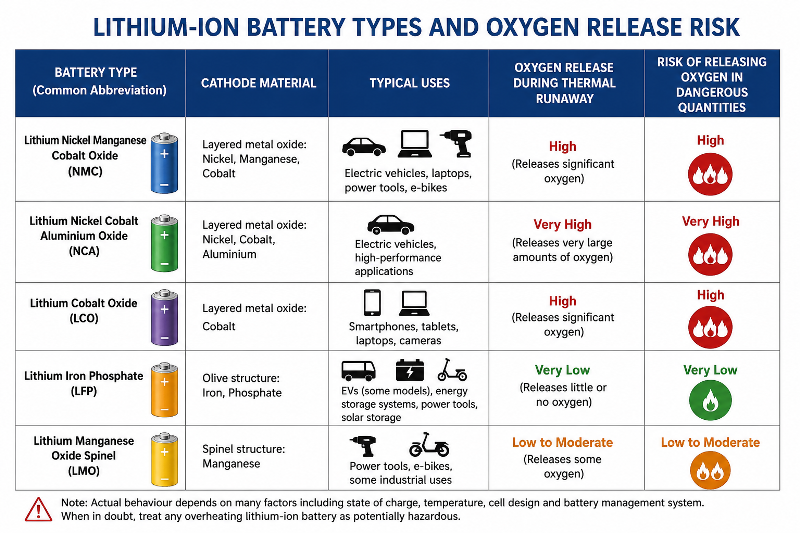
Some lithium-ion batteries, particularly those with metal–oxide cathodes, can release oxygen when this happens. This oxygen may stoke a fire by feeding combustion inside the battery. This is why we ought to ask, does that battery offer safer lithium-ion oxygen release?
Popular Types of Cathodes in Lithium-Ion Batteries
Relatively Unstable Metal-Oxide Batteries
Common metal-oxide cathodes include lithium nickel manganese cobalt oxide (NMC), lithium nickel cobalt aluminum oxide (NCA), and lithium cobalt oxide (LCO).
These relatively unstable chemistries are popular, because they provide higher energy density. Hence they are common in electric vehicles, power tools, laptops, and other portable electronics.
Relatively More Stable Metal-Oxide Batteries
Some other lithium-ion batteries, such as those using lithium iron phosphate (LFP) cathodes, are more thermally stable. They release little or no oxygen under the same conditions, making thermal runaway less likely to spread rapidly.
What This Means For Lithium-Ion Battery Users
These differences offer little practical help during a thermal runaway emergency, unless someone already knows whether the batteries provide safer lithium-ion oxygen release, or not.
This is because the battery chemistry often appears as very small text on the case, and may only provide the model number. In fact, it may not appear on the battery case at all.
Many batteries are also sealed inside electronic devices, making identification impossible without dismantling the product.
The best way to manage this dilemma, could be to assume that any overheating lithium-ion battery has the potential to become dangerous. If one begins to smoke, swell, or becomes excessively hot, move it to an open space if this is safe, and call your emergency service.
More Information From Our Blog