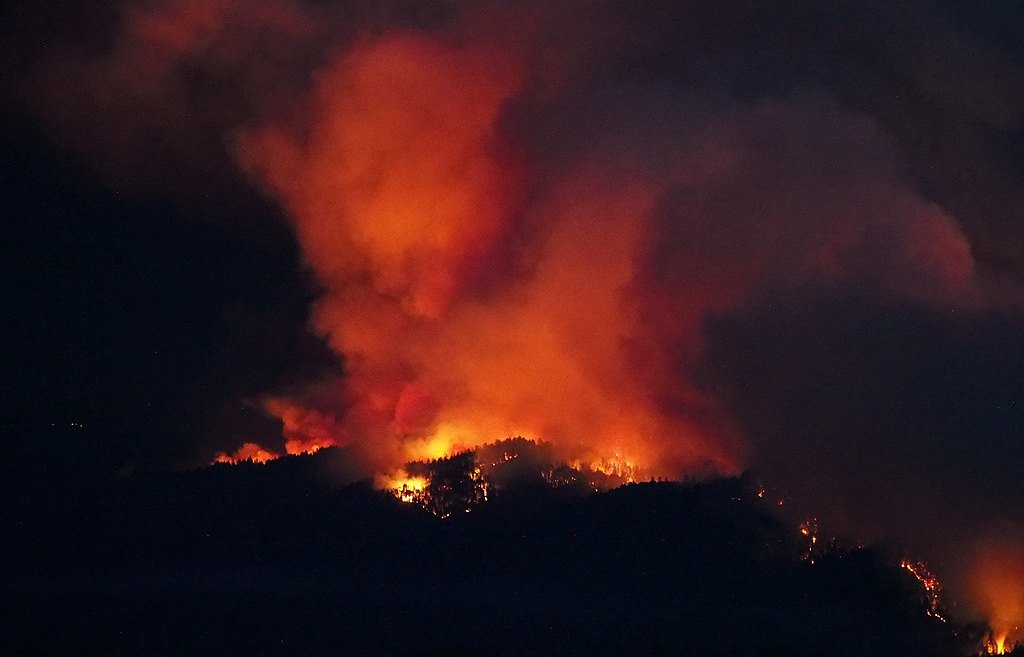
The wildfire season is upon us again in southern parts of the United States, after an unusually hot summer. Heat causes fires and when humans set them they can run out of control. Forest managers would therefore like to burn corridors through high risk areas to slow fire spread. But there’s a double jeopardy in a COVID-19 wildfire season that’s preventing this happening.
What the Double Jeopardy in COVID-19 Wildfire Season Means
Extreme fire events seem commoner in a warming world. Forest managers need new ways to manage this threat, while not endangering their people. Deliberately igniting forest giants is a challenge of huge proportions.
The debate on the wisdom of doing this is continuing, with solid reasoning from both sides. However, a double jeopardy in COVID-19 wildfire season is adding another spin. The pandemic is still spiking across America. Burning fires could make it worse, says Eli Cahan, writing in American Association for the Advancement of Science journal Science.
A Link Between Forest Firesqu and COVID-19 Severity
State and Federal Agencies began limiting prescribed burns back in March 2020. This was because they were concerned wildfire smoke would aggravate the pandemic, and the concern is still there.
Rachel Morello-Frosch, environmental epidemiologist at the University of California, Berkeley says the smoke contains microscopic particles. These can lodge in lungs and enter the blood stream causing respiratory diseases like asthma and emphysema.
Numerous studies in U.S., UK, Italy and China have proven the smoke also increases COVID-19 morbidity. The double jeopardy in COVID-19 wildfire season facing forestry administration is this. Do we want some certainty right now, or take a chance and see if we can manage this situation.
Related
AI Predicted Respiratory Disease Developing
COVID-19’s Persistent Shortness of Breath
Preview Image: Fire Caused by Lightening