

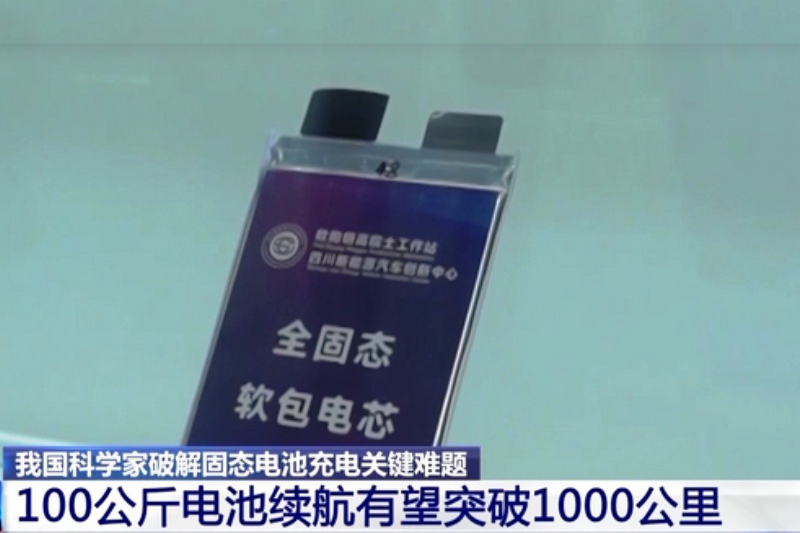
China Central Television announced a major solid-state lithium-ion battery breakthrough on October 16, 2025. This progress amounts to doubling electric vehicle battery range from 315 to 630 miles. Google translated the China Central Television article for us. We’ll put content in single quotes if we are uncertain about anything.
Triple Breakthrough Doubling EV Battery Range
Solid state lithium batteries have great potential to share the market with their lithium-ion counterparts. However, they currently have performance difficulties, which three Chinese breakthroughs appear to resolve. However, we first need to revisit those drawbacks, before we examine the improvements doubling electric vehicle battery range.
- Lithium ions transport electrons from positive to negative electrodes.
- Solid state electrolytes provide a highway for these electrons to travel.
- The sulfide solid electrolytes are hard and brittle like ceramic crockery.
- Whereas in contrast the electrodes are as soft and pliable as plasticine.
- Those two materials do not adhere well, resulting in bumps and gaps.
- This compromises the efficiency of battery charging and discharging.
Three Discoveries Could Double Driving Range
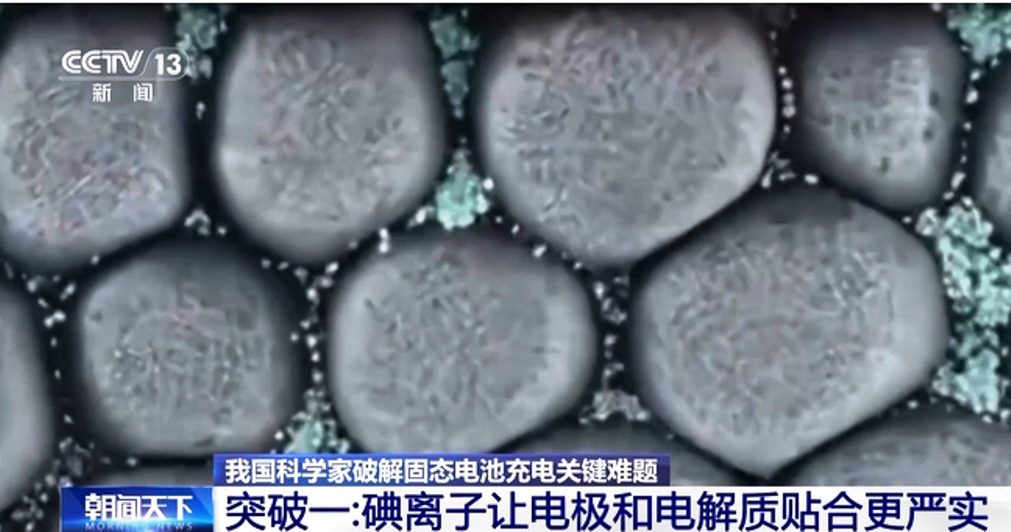
Researchers at Chinese Academy of Sciences institute of Physics, have come up with a ‘glue’ of iodine ions. These ‘magnets’ attract lithium ions. They rapidly fill small gaps in the electrolyte / electrode interface, forming a seamless bond.
Meanwhile, a team at Institute of Metal Research of Chinese Academy of Sciences has derived an ‘electrolyte skeleton’ of polymer materials. This structure functions like a ‘plastic wrap’, protecting the solid-state battery from stresses and strains. Other components facilitate ion transfer, increasing capacity by 86%.
A third team of scientists at Tsinghua University’s Fluoro Reinforcement initiative, have modified the electrolyte with a ‘fluorinated polyether’ material. This prevents ‘high voltage’ escaping through the electrolyte during charging, despite needle penetration tests.
The future is here, trumpets China Central Television. Doubling electric vehicle battery range will turn the future of electric mobility into reality, they say.
More Information
Creating Solid Electrolytes For Batteries
Nylon Boosts Lithium Solid State Batteries


