U.S. Food and Drug Administration (FDA) released a follow-up evaluation of Pfizer booster doses on September 19, 2021. The document – see link below – confirms those aged 65 and older, and those with infirmities should have the booster at least 6 months after the second shot. However while FDA confirms waning Pfizer effectiveness, it does not recommend blanket boosters for people aged 16 and older.
Unanimous Recommendation by FDA Committee
The FDA report responds to a Pfizer application for authorization of blanket booster shots. All 18 members of the Vaccines and Related Biological Products Advisory Committee agreed known benefits among the older group exceeded risks.
The age-related recommendation is counter-flow to current administration strategy to make blanket boosters available to all after eight months. The Advisory Committee considered the data before it did not justify the wider distribution.
Some members were concerned by lack of evidence a third shot was safe for younger people. They did however leave a door open by extending it to ‘those at high risk’, without nailing down a definition.
Waning Pfizer Effectiveness Confirmed by FDA and CDC
Centers for Disease Control (CDC) released a fresh study confirming waning Pfizer effectiveness hours before the FDA release. The main findings in their report – see link below – are as follows according to New York Times:
1… The full Pfizer vaccine remained 91% effective in preventing hospitalization for 120 days.
2… However, beyond that point dual Pfizer effectiveness ‘declined significantly’ to 77%
3… By contrast, two Moderna doses remained 92% effective beyond 120 days
4… There was insufficient evidence for Johnson, although it is generally 77% effective
The FDA finding confirms waning Pfizer effectiveness compared to Moderna could be down to smaller dose sizes. Although shorter intervals between shots might have also have caused the difference. Both vaccines use mRNA technology, and generally performed similarly in previous studies.
Breaking News
Human Behavior Behind the Rise in Variants
How COVID-19 Affects People with HIV/AIDS
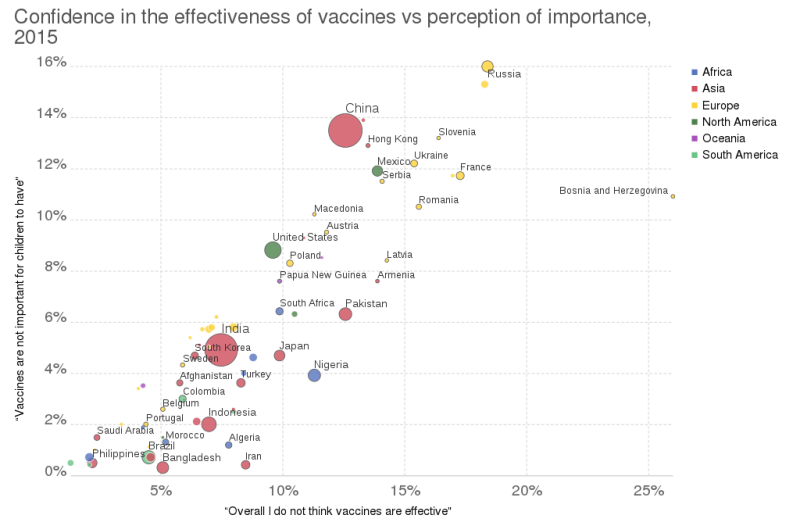
Preview Image: Confidence in Vaccines (2015)