The Royal Society of Chemistry founded in London in 1877 as the Institute of Chemistry, with the intention of raising the status of the science. It improved training programs, and set standards for qualifications, including university degrees. One-and-a-half centuries later it continues on its mission to promote the profession. This strategy includes a global battery experiment, in which kids around the world participate.
How to Take Part in the Global Battery Experiment
Student groups from all over the world have a choice of two different experiments. One is more complex than the other, so they and their teachers should decide which one is right for them. The Royal Society webpage (see link below) provides detailed notes for school teams and teachers to follow. They upload their findings by following the link, where they form part of a global database.
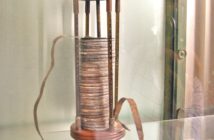
Each of those two experiments involves making and testing coin-type batteries. There are no special requirements, except perhaps for a multi meter to measure battery performance. Teams compare their results with others on the global battery experiment data base. Just imagine making the best coin battery in the world!
The Two Royal Society of Chemistry Experiments
Choose between these two options, and upload your results to the Royal Society of Chemistry website we link to below.
The First Global Battery Experiment for Kids
This more straightforward option uses 10 coins, or washers of the same size, vinegar electrolyte, and cardboard separator material. The testing tool is a small LED light. You may have seen videos of this experiment before. But now’s your chance to watch, and participate in the real thing.
Compare Coin Batteries Using Different Materials
The second experiment in the series is more complex, because you need to trial five different types of electrolyte. Which will one perform better? Will it be de-ionized water, saline solution, sodium hydroxide solution, sulfuric acid solution, or vinegar? Find out by enrolling in the global battery experiment now. You could be a winner!
More Information
Insulators Conductors Materials & Experiments
Experiments with Batteries and Circuits