Researchers at Institute of Solid State Physics at Chinese Academy of Sciences. may have made a significant breakthrough. Their discovery greatly improves both the durability and performance of lithium-rich, manganese-based cathodes. Their gradient lithium-rich cathodes sound significant for our world of batteries, and so we investigate further …
More About The Gradient Lithium-Rich Cathodes
The China scientists noted how lithium-rich layered oxides promise high capacity for lithium-ion batteries. However, these have never reached consumers because of severe capacity loss and voltage decay.
The team developed a new lithium-rich, manganese-based layered oxide prototype that eased these problems as follows:
- The manganese concentration progressively reduced from the center of the oxide to the surface.
- While the nickel concentration progressively increased from the center of the oxide to the surface.
This new gradient lithium-rich cathode material delivered ‘exceptional cycling stability and rate capability’. It was able to store an impressive 216 milliamp-hours of charge per every gram weight of material.
This high capacity endured even when the cathode discharged fully within one hour. Moreover, it retained 91.8% of its storage ability, even after it charged and discharged within a half hour, 200 times.
In plain, non-technical English this means the gradient lithium-rich cathode stored a relatively large amount of energy. It worked well even when used quickly, and kept most of its energy after heavy use.
What These Cathodes Could Mean for Batteries
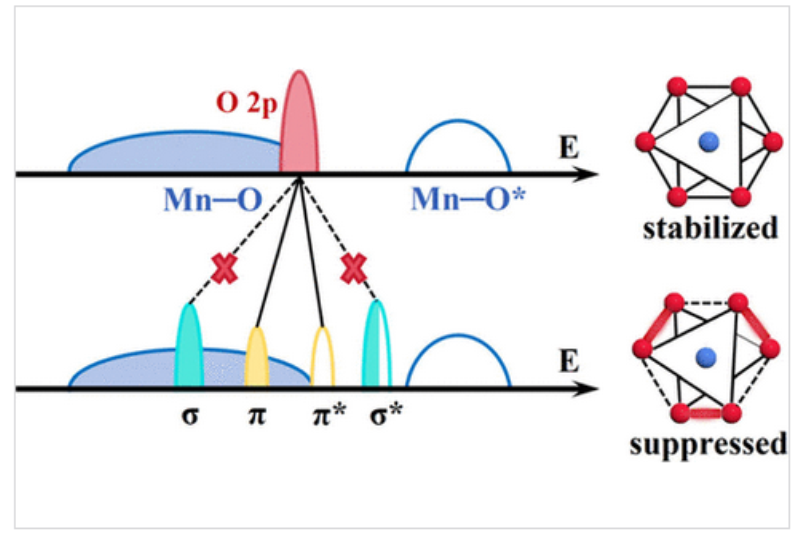
BioEngineer regards this breakthrough as an ‘innovative approach to engineering the internal structure of cathodes’. Especially in the way it ‘meticulously regulates internal stress and electronic properties’.
In this instance, of course, this finding applies specifically to gradient lithium-rich cathodes in lithium-ion batteries. However, we don’t see why this concept should not apply to other battery chemistries too.
More Information
Restored Li-Ion Cathodes With 76% Capacity
Manufacturing High Performance Cathodes
Preview Image: Illustration From ACS Report