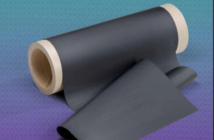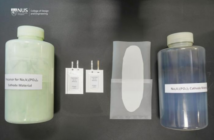
All batteries contain anodes and cathodes, plus electrolytes and separators that ensure the first two function correctly. The energy in a battery leaves it via its cathode, so the electricity can do its work in the real world. Cathode materials are critical to this process, and often contain costly minerals. We bring news of a fresh way of manufacturing high performance cathodes from disordered crystalline rocksalt.
Why Do We Need These Manufactured Cathodes Now?
We popped by Google to learn more about crystalline rocksalt. There we discovered it is a crystalline structure, with alternating sodium and chloride ions. This compound sells in shops as Himalayan Pink Salt, where it is a favorite food enhancer. Rock salt is also handy for de-icing roads.
Disordered rock salts are a special class, which scientists abbreviate to DRX. Their big advantage is they often contain excess lithium, that facilitates the movement of ions. Hence, as Berkeley Lab observes, disordered rock salts are promising materials for lithium-ion battery cathodes.
Cobalt and nickel are commonly-used materials for making battery cathodes. However, those minerals are expensive, add to the cost of batteries, and have to be mined at the cost of the environment. Thus, there is a good case for manufacturing high performance cathodes from disordered rock salts instead.
High Performance DRX Lithium-Ion Battery Cathodes
Battery researchers have known the potential of disordered rock salts for a while. However, they have struggled to standardize the quality and size of their DRX particles. This has prevented their use as cathodes in electric vehicles, and storage batteries until now.
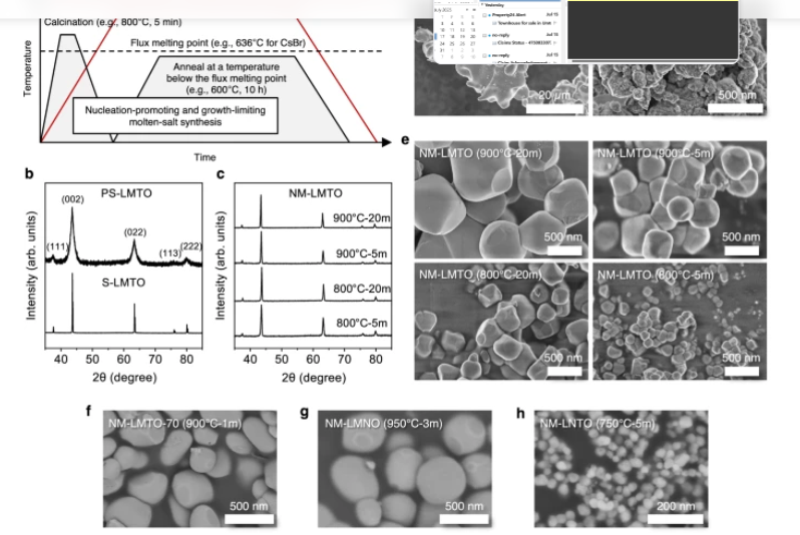
McGill University scientists in Montreal, Canada, worked with colleagues in U.S. and Republic of Korea to tackle this shortfall. Their efforts produced a new way of directly synthesizing uniformly sized, highly crystalline particles, that do not require grinding or post-processing either.
The new cathodes performed well during testing, and retained 85% of their capacity after 100 charge-discharge cycles. This appears to open the gate for next gen lithium-ion batteries, that are both cobalt and nickel free.
More Information
Manganese Disordered Rock Salt Cathodes
More Durable Battery Cathode Materials
Preview Image: Synthesizing New Cathode Material
News Release from McGill University July 11, 2025