Western Europe will see a rapid transformation of its energy strategy, as it frees itself from chains of fossil fuel. Global politics may be accelerating this, but the climate imperative has been pushing hard for the past decade. Handling battery energy storage safely is becoming an even higher priority, as batteries enter almost every sphere of citizens’ lives.
Safely Handling Battery Energy Storage in Future
RECHARGE is a European organization representing all aspects of advanced rechargeable batteries throughout the value chain. Its sphere of activities includes battery safety, waste management, environment, and social responsibility through sustainability.
However, it also recognizes batteries’ overarching goal of improving the quality of life, for everybody, everywhere. And that, we believe is an aspect of immeasurable importance for the future of our planet, and all its creatures including humanity.
Battery safety is therefore a key priority for the RECHARGE interest group. It is an active member of the United Nations Sub-Committee of Experts on Transport of Dangerous Goods. And it also co-chairs the SAE G-27 standardization committee for Safety Test of Lithium Battery Packaging.
Towards a Standard Battery Hazard Classification
RECHARGE is therefore developing a battery hazard classification framework in tandem with other industry experts. This will embrace production, packaging, testing, and safety obligations during transport.
“We want to educate society on the safe use of battery power,” it assures visitors to its website. “Because batteries are finding uses in so many different applications, that people sometimes forget that these are energy sources.”
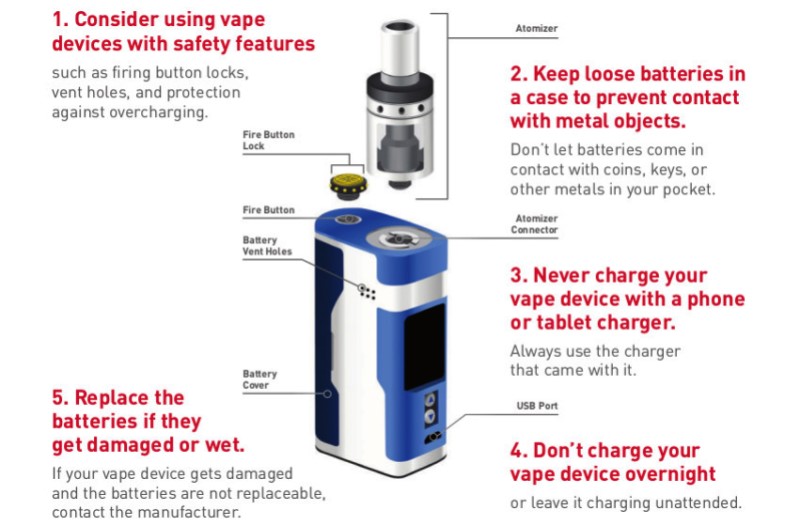
Batteries should never be modified, opened, repaired, or damaged in any way. Users should only use them as indicated for appropriate devices, and never team them with other storage systems. Handling battery energy storage safely is becoming part of all our lives at an amazing pace.
Breaking News
Fluoride-Ion Could See Lithium Batteries Off