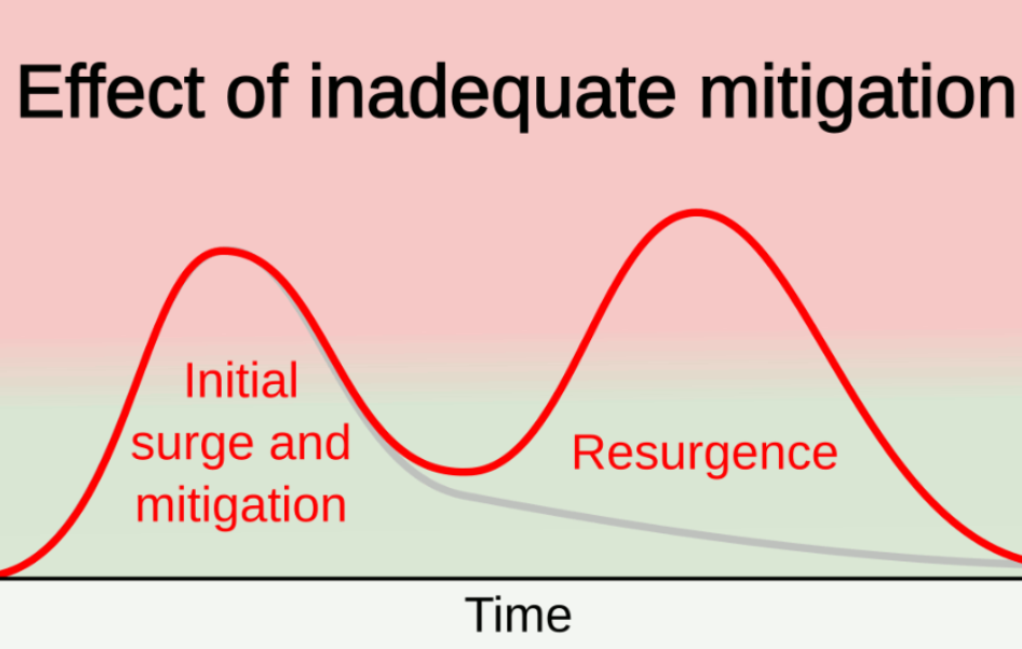
A Covid epidemic peaks in a country when the number of new infections continues to fall over a two-week period. This ‘watching time’ is necessary because infections may take as long as that to show. An uncontrolled peak rises rapidly at first, because almost everybody is vulnerable. Then it declines as the virus starts running out of new cases. Efforts to flatten the curve reflect our understanding of how a COVID-19 epidemic peak works.
Critical Factors Behind How a COVID-19 Epidemic Peak Works
Every country displays a somewhat different COVID-19 curve. This reflects its success in managing the spread, and other factors we are beginning to discover. However, it’s important to note this is only the pattern of known cases. Therefore, we will probably never know how the disease traveled in accurate detail.
Understanding how a COVID-19 epidemic peak works is however not as simple as that though. This is because the crisis is not over. It may accelerate to a second peak if the population drops its guard, or the government tapers off track and trace. Finding and isolating new cases should be with us for a long time.
Therefore We Need to Be Ever-Ready, and On Our Guard
We, the citizens of our country catch the virus, and we spread it too. Many of us will still be susceptible when the epidemic starts tailing off. In fact we may be vulnerable for the rest of our lives. Kaiser Health News suggests social distancing could remain with us for a long while to come.
Knowing how a COVID-19 epidemic peak works is therefore only the beginning of a longer-term solution. For if we relax our public safety measures too soon, then this could allow a second surge. Harvard researchers warn this second peak could take up to five years to materialize. Resurgence is becoming increasingly likely, as we must relax controls for our economy’s sake.
Related
Two Billion Doses of an Adenovirus Vaccine
The Lost Generation in the Shadow of a Virus
Preview Image: Consequences of Ineffective Mitigation