Scientists at MRC-University of Glasgow Center for Virus Research in Scotland, believe inherited factors affect severity of COVID-19. Although the molecular explanation at microscopic level is often unclear to them. We append several informative links below. The first is their press release report. While the second is their academic study appearing in the journal Science.
Some Individuals Have Stronger Natural Defenses
The Scottish scientists were initially curious to know why some people are naturally more resistant to the virus. But they also hoped to discover whether this resistance could crumble under a determined attack. They were aware some people’s immune systems are more powerful, but they did not understand the chemical process behind this.
They found the answer lies in a version of the OAS1 gene. Because this contains essential proteins involved in the innate immune response to infection. Some people are naturally able to produce a more ‘prenylated’ version of this gene. The term ‘prenylation’ refers to the efficacy of attachment of molecules to cell membranes.
How This Inherited Factor Affects COVID-19 Severity
The MRC-University of Glasgow press release explains how coronavirus cells conceal themselves inside fatty layers where they replicate. The ‘prenylation’ as they call it adds an additional, single molecule of lipid fat. This then allows the prenylated OAS1 gene to spot the invading virus and ‘trigger an alarm’.
There’s compelling evidence this genetically inherited factor affects the severity of COVID-19 outcomes. That’s because the researchers discovered hospitalized COVID-19 patients with the ‘bad’ form of OAS1 had worse clinical outcomes, than those who produced the protective prenylated version of the gene.
‘Our study shows us the coronavirus that caused the SARS outbreak in 2003 learned to evade prenylated OAS1. If SARS-CoV-2 variants learn the same trick,’ they warn. ‘Then they could be substantially more pathogenic and transmissible in unvaccinated populations.’
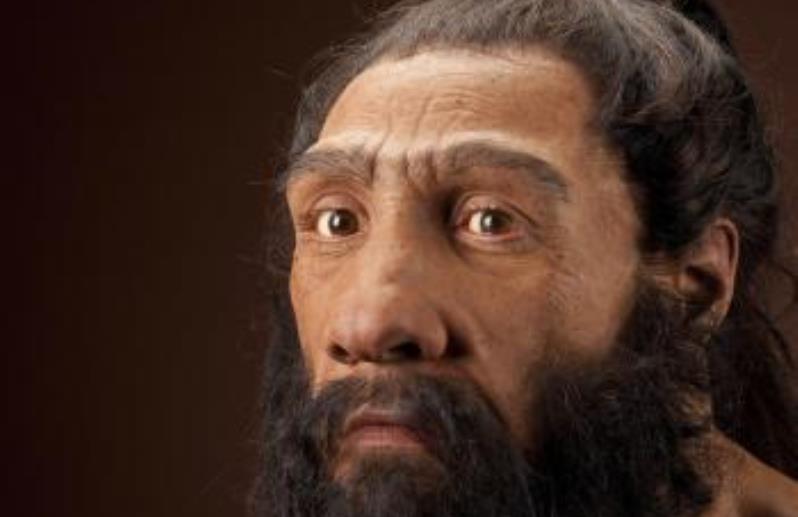
An earlier study in Nature Medicine reports an OAS1 variation, inherited from Neanderthals reduces susceptibility to SARS-CoV-2 infection. And increases resistance to severe symptoms too. Neanderthals were a distinct human subspecies absorbed by our early European ancestors.
Breaking News
Breast Milk Antibodies Have More Endurance
mRNA Vaccine Effectiveness Against COVID
Preview Image: A Neanderthal Reconstruction
MRC-University of Glasgow Press Release