To make a meringue, you whip up a mixture of egg white, sugar, and a dash of lemon. Plus a binding agent such as salt or vinegar. Then you bake it to create a perfect lightness, with pockets filled with air. If you are wondering what that has to do with electricity, there are lessons from meringues for LIS batteries, which we share here.
More About LIS Batteries (And Meringues)
Lithium-ion batteries have taken electricity storage to new heights, but they have their limitations. We therefore need a new chemistry to take us further. Cheaper lithium-sulfur batteries (LIS) are promising candidates, because they store more energy by weight.
But LIS batteries have a problem, because they are up to twice the size of lithium-ion batteries. And that makes them non-runners for electric cars, smartphones, and wearable devices. Moreover, these batteries have another challenge too. Their ions cycle relatively slowly, and this affects their performance.
Battery makers have attempted to resolve the slow cycling issue, by making their cathode electrodes porous, so ions can move faster through them. But this makes LIS batteries even larger. Researchers at Monash University in Australia, have taken lessons from meringues for LIS batteries, and found a new way to tackle this.
Time to Stop Rolling Out LIS Electrodes Like Dough
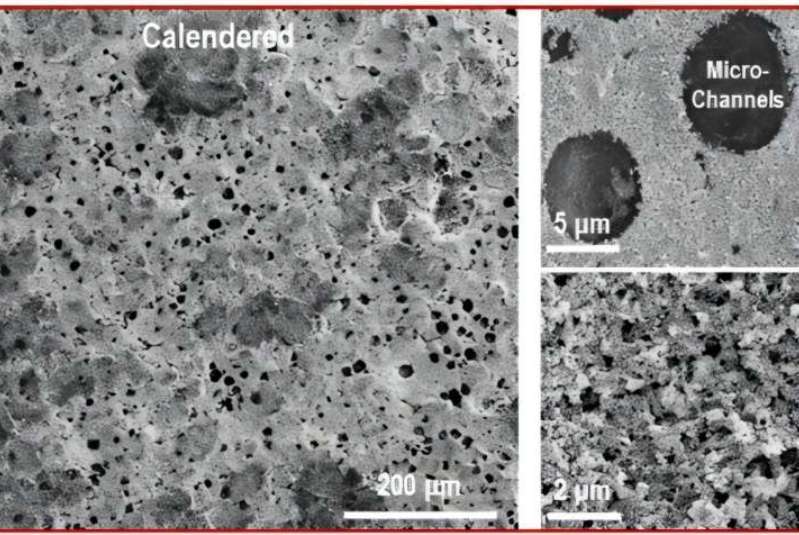
LIS battery makers usually create electrodes by rolling them out, a bit like bread dough. This crushes the pores making it harder for the ions to flow inside. The Monash researchers realized that LIS batteries needed more generous pores. Just like meringues, they decided.
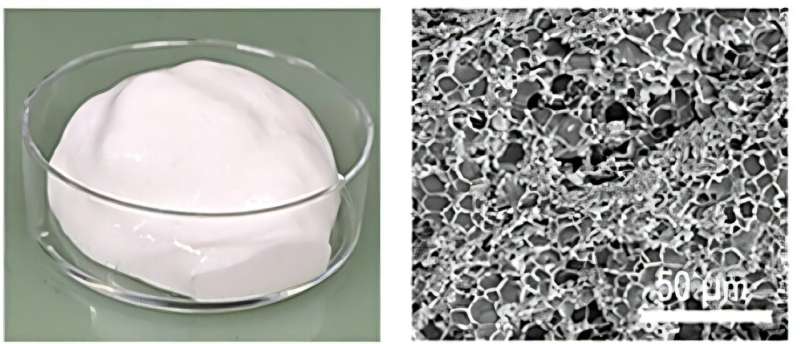
The Monash team revisited the composition of the binder, that holds the parts of the LIS cathode together. Their goal was to incorporate pathways for ions to flow faster, between other densely packed materials.
They whipped up a novel binder that looked like a meringue, and coated it on the current collector. As this compound dried, the bubbles collapsed, leaving behind ion pathways through a thinner cathode after they rolled it a bit like dough.
Their LIS battery performance doubled, even with fast charging and discharging, thanks to direct pathways through the battery cathode. Cheers from the ‘battery kitchen’. There’s something new to learn every day!
More Information
Lithium-Sulfur Smart Separator Impresses
Corn Boosts Lithium-Sulfur Performance
Preview Image: Novel LIS Cathode