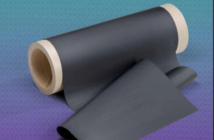
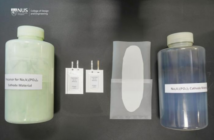
A cathode is a positively charged component of a battery, that delivers energy via a positive terminal. Positively-charged cathodes therefore play an essential role in the quality of the energy that a battery delivers. Researchers at Graduate Institute of Ferrous and Eco Material Technology in South Korea, have found a way to produce more durable battery cathode materials.
More Durable Lithium-Ion Battery Cathodes
The transition to electric vehicles has slowed, as consumers become aware that their lithium-ion batteries, which are expensive, have limited lifespans. This comes as a shock compared to internal combustion engines, often still working when the rest of the vehicle is scrap.
Lithium-ion batteries, such as we find in most electric vehicles, tend to use lithium-oxide in their cathode. Popular examples include lithium cobalt oxide, lithium manganese oxide, lithium iron phosphate oxide, and lithium nickel manganese cobalt oxide
These lithium oxide materials are however not ideal, because lithium metal is scarce, expensive, and can become unstable. Nickel is an attractive alternative on paper, because, like lithium, it has high energy storage capacity. However, the metal is not durable, resulting in shorter nickel cathode life.
The Korean scientists whose report we link to below, have been investigating possible solutions to this challenge. They have made some interesting discoveries, findings that could perhaps lead to more durable battery cathodes.
More Information About This Intriguing Discovery
The team from South Korea experimented with increasing the metal content, in extremely rich lithium nickel manganese cobalt oxide cathodes. They noted how this compromised the mechanical durability of their particle micro-structure.
They then experimented with calcination temperature increases, that change the physical properties of materials without actually melting them:
- Increasing the temperature initially caused the primary cathode particles to undergo a rectangular growth pattern,while the pore population decreased.
- However, above 850 °C there was a step change, as primary particle size increased while the pore population simultaneously decreased.
This change enhanced the durability of the extremely rich lithium nickel manganese cobalt oxide cathode. The team claims this as a step forward towards cheaper, faster, and longer-lasting electric vehicle batteries.
More Information
Lithium-Ion Manganese Oxide Longevity
Lithium Ion Manganese Oxide Batteries