

Lithium is the metal with lowest density, meaning least compactness. It also has the greatest electrochemical potential (ability to store and release energy), and energy capacity per unit of weight too. Low atomic weight and small-size ions also speed its diffusion, making it easier for molecules to pass through barriers. These factors make lightweight lithium metal an ideal material for batteries.
Early Trials with Lightweight Lithium Metal
American physicist-chemist Gilbert Lewis experimented with lithium chemistry in 1912. Later, Lewis Urry firmed up on the concept, although he is best known for inventing the alkaline battery in 1955.
The first single-use, primary lightweight lithium metal cells came to market in 1974. Button versions of these remain popular, especially in cameras and very small devices. Then three important developments followed in the early 1980’s.
- American chemist, John Goodenough, developed the LiCoO2 (lithium cobalt oxide) cathode in 1980.
- Moroccan research scientist, Rachid Yazami, discovered the graphite anode with solid electrolyte in 1980.
- Japanese chemists Yamabe and Yata discovered a polyacene for anodes in conventional liquid electrolyte, in 1981.
Towards Practical Lightweight Lithium Metal Batteries
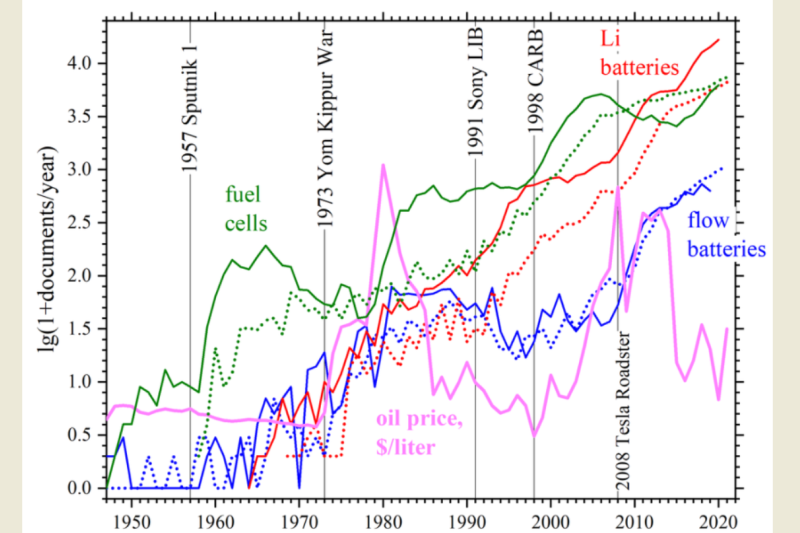
Then in 1985 a Japanese research team, lead by Akira Yoshino of Asahi Chemical succeeded in building the first practical, rechargeable lithium battery. Sony later commercialized this in 1991, and the race was on.
Sony and Asahi Kasei released a lithium battery with solid polymer electrolyte laminated to the electrodes in 1997. This arrangement made it possible to enclose the chemistry inside flexible wrapping, and in specific shapes to suite particular devices. However, these had lower density than regular ones.
Lithium-ion batteries are the energy storage solution of choice for many applications. However, they are subject to dendrite formation, overheating and occasional fires. Some believe scientists have taken the technology to its upper limits. However, right now a suitable contender does not appear to be waiting in the wings.
More Information
Lewis Urry and the First Alkaline Battery


