A team of scientists say they invented a solid-state lithium battery that stores twice the energy of a standard one. However, and here’s more great news, it has less potential to catch fire too. Apparently, they achieved this after omitting one of the electrodes. But how would this lithium battery with double the energy work?
The Inner Workings of Conventional Lithium Batteries
All conventional batteries, including lithium ones, supply energy by creating chemical reactions between electrodes. In the case of lithium batteries, these store and release electrically-charged lithium ions. Their anodes are typically graphite, while their cathodes are usually a metal oxide:
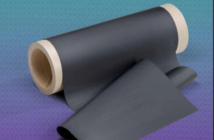
- The anode material normally coats on a copper-foil current collector.
- The cathode material typically covers an aluminum-foil current collector.
These anodes and cathodes traditionally interact through liquid or gel electrolytes. Although more-compact all-solid-state batteries nowadays have solid electrolytes of materials such as ceramics.
Generating Double Energy with New Lithium Battery
Scientists have been wrestling with the challenge of replacing standard graphite anodes entirely with copper-foil current collectors:
- They believe this might boost their capacity for storing energy.
- That’s because this step would remove half the internal material.
- Less internal material should also reduce the cost of the battery.
But the problem has always been to achieve this within a stable structure. This time the team of researchers who invented the new lithium battery with double the energy tried a fresh approach.
They used a sulfide-based solid electrolyte, teamed with an ultra-thin lithium-activated tellurium coating on the copper current collector. This controlled the way the metal spread, achieved a thin uniform layer, and proved to be the solution.
IEEE Spectrum magazine says the new battery can hold 72% more energy by weight. And also deliver 95% more energy by volume than commercial lithium-ion batteries.
“These findings may provide key missing links for wide-scale commercialization of anode-free, and all-solid-state batteries,” says David Mitlin. However, the materials scientist at the University of Texas at Austin cautions, “a huge amount of work is still needed”.
More Information
Stretch Your Batteries on Windows 11
Two Ways to Make Lithium Batteries Safer