

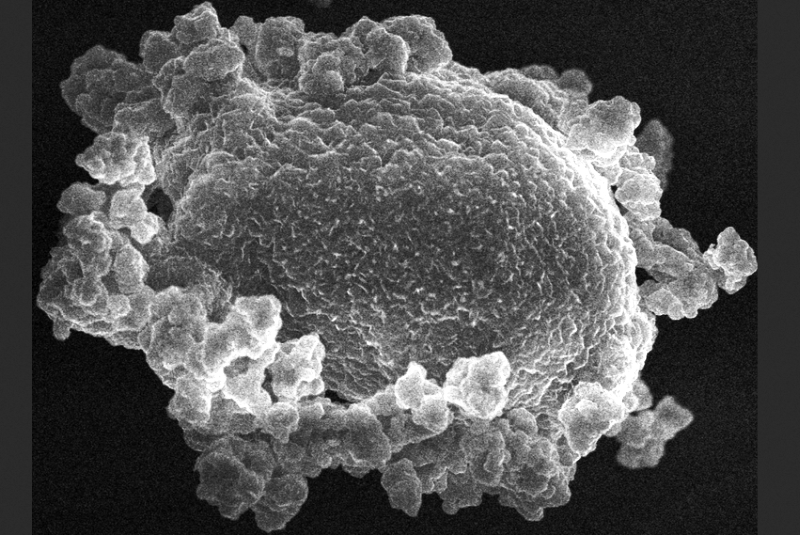
Pacific Northwest National Laboratory published a media release on April 15, 2025, that we link to below. There, they describe how lithium oxide gas leads to better batteries containing nickel-rich cells, when heated to 900 degrees celsius.
This process forms a single crystal material, for nickel-rich lithium-ion battery cathodes. The discovery could be an important step towards longer-lasting lithium-ion batteries, that cost less to manufacture.
How Sublimation of Lithium Oxide Gas Does the Trick
Sublimation is a chemical process whereby a solid substance transforms to a gas, without passing through a liquid state. Although in psychology the term may refer to transforming unacceptable impulses into more positive behaviour.
Getting back to the battery business, a team at Pacific Northwest National Laboratory has been exploring a variety of different lithium salts. These are lithium compounds, that traditionally treat bipolar and major depression disorders.
However, in our world of batteries, lithium salts play an essential role in modern lithium-ion batteries too. Manufacturers combine lithium-ions with second, unrelated types. These compounds deliver an electrolyte that speeds the flow of ionic charges between electrodes.
The Pacific Northwest National Laboratory team knew that the type of lithium salt impacted on the the battery’s performance. This includes its ability to recycle, its operating temperature, and its safety too. In this particular instance, they were exploring ways to add nickel ions to the cathode.
How a Single Crystal Material Simplified Lithium-Ion Batteries
The researches considered how a comet’s solid icy shell vaporizes, without becoming liquid as it flies past the Sun. They discovered how, here on Earth, lithium-oxide vapor creates a single crystal structure under high heat.
“This discovery offers a potentially faster, more efficient, and cheaper way to scale up the manufacturing of nickel-rich lithium-ion batteries,” the lead researcher explains.
Creating materials for batteries is a little like baking. Combine the right ingredients, apply heat, and produce something new, their press release explains. This is how lithium oxide gas leads to better batteries, when mixed with nickel precursors in their experiment.
More Information
Single Crystal Cluster Materials For Cathodes
Stabilizing High-Nickel Cathodes For L-Ion
Preview Image: The Single Crystal Structure


