Extending the lifetime of cathodes in lithium EV batteries has remained an unsolved mastery until now. Scientists at the Brookhaven National Laboratory may however be on the way to solving it. That’s because they say they have nickel-rich cathode degradation licked. If they can get their idea to market, we could see more affordable and better-performing EV batteries appear.
How Research into Nickel-Rich Cathode Degradation Began

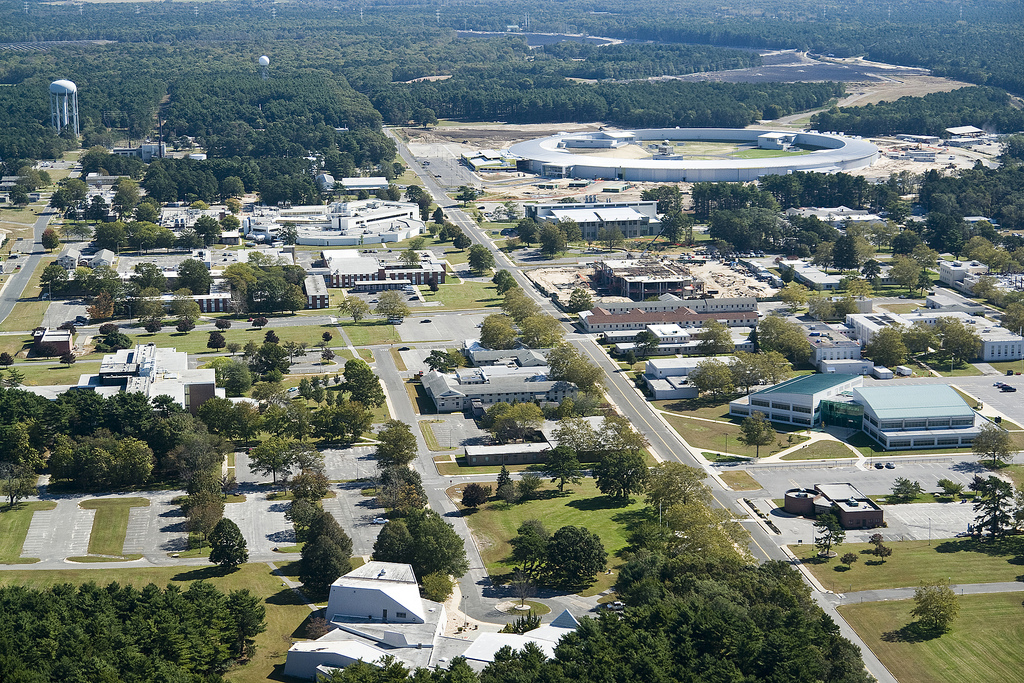
The Brookhaven National Laboratory is 60 miles east of NYC on the site of a 1947 US Army base. Nowadays, 2,750 scientists and engineers on the 5,300-acre campus conduct high-level research there.
Popular themes include nuclear and high energy physics, energy science and technology, environmental and bioscience, nanoscience, and national security. In this instance, the goal of a small, four-person team was to develop a new lithium-based battery. They decided to tackle the cathode first. Because they hoped to enable EV vehicles to deliver the same reliability as gas.
Cathode Degradation is a Complex Problem
Cathode materials can degrade in several ways, says paper author chemist Enyuan Hu. However the consequences of nickel-rich cathode degradation are mainly capacity fading. Therefore this means a reduction in the battery’s charge-discharge capacity after use.
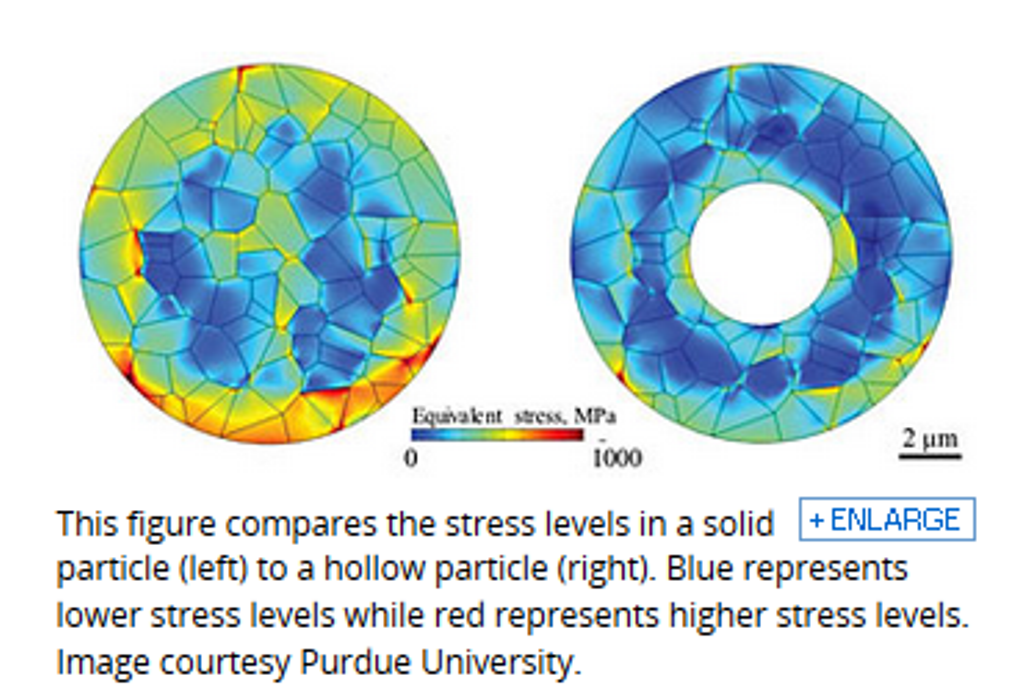
They analyzed every nano-second in a nickel-lithium battery’s charge / discharge cycle using x-ray microscopy. Their main finding was “Some nickel within the particle maintained an oxidized state, and likely deactivated. While the nickel on the surface was irreversibly reduced, decreasing its efficiency.” The team wondered how to manage these differences in the oxidation states of the nickel atoms.
They decided to synthesize a hollowed structure, and confirmed this improved things experimentally, and through calculations. “We work in a development cycle,” they told Science Daily. “You develop the material, then you characterize it to gain insights. Thus it’s a pathway to continuous improvement.”
Related
Will Nickel-Iron Batteries Make a Come Back?
Towards a Battery Holding a Decent Charge
Preview Image: Brookhaven National Laboratory