A magnet might tell you to charge a battery someday, or magnetic material to be more precise. At least that’s in the minds of University at Buffalo scientists at State University of New York. Science Daily described how this could work on June 12, 2022. We understand these things take time to come to market, but it is still an intriguing idea.
How Magnetic Material Could Tell Us to Charge a Battery
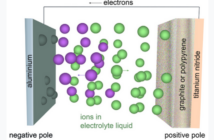
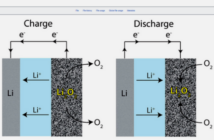
Lithium ions move from one side of a lithium-ion battery to the other and back, as it charges and discharges. University at Buffalo scientists added a special magnetic material at one end of the flow that responds to this process.
They noted a change in the magnetic level while this happened. And this in turn reflected the level of charge remaining in the battery. Our main goal was actually to research the magneto-ionics, Shenqiang Ren, a scientist and engineer explains. Now magneto-ionics involve the effects of a magnetic field on ionic behavior.
The scientists were actually observing how their special material changed its magnetism as lithium ions traveled through it. But then they realized they could use the data to calculate the battery’s state of charge too.
What We Know About the University at Buffalo ‘Magnet’
It’s great to know a magnet could tell us to charge a battery someday, but how practical is this? Science Daily explains the team’s magneto-ionic material is made from vanadium, chromium and cyanide, with an aqua ligand binding them together.
Of course, this is not the only way to determine a battery’s state of charge. Currently, the most accurate way involves continuously monitoring voltage, amperage, and ampere hours remaining.
But this is a complex calculation of the energy available, energy consumed, and the energy returned to the battery. However, the team from University at Buffalo hope the alternative they found will be a faster way to sense this information.
Breaking News
First Commercial Long-Duration CO2 Storage
Could Australia Become a Virtual Power Plant?