

Every new object in the house that someone handled could potentially have the virus on it. That’s a manageable risk if we are still young and healthy, because the disease mostly travels through the air. However, if a member of the household is vulnerable because of their underlying health, then that’s another matter. Today we consider whether microwaving the coronavirus off take-outs is a wise precaution.
Or Is This Just More MisInformation?
WebMD curated a post from Fodor’sTravel that suggests heat the kills the virus. They say World Health Organization suggests we need at least 56º Celsius (132º Fahrenheit) for 15 minutes for a ‘quick reduction’.
But 15 minutes in a microwave could turn a tasty take-out into something unsuitable for sensitive viewers! Therefore, WebMD suggest the household oven could be the better option.
Centers for Disease Control says the virus does not travel in food. However, it could travel ON food, if someone with the infection coughs or sneezes over it. It’s unlikely the virus could transmit to another person, but the possibility is there.
Microwaving the Coronavirus Off Take-Out Packaging
Zapping the take-out inside the packaging could also have undesirable results. However, it’s a known fact the virus can survive for days on shiny surfaces. For this reason, WebMD suggests it’s the packaging we should be worried about, and not the food.
Loosely speaking, we should disinfect the outer surfaces of take-outs and courier delivery packages as a standard precaution. And disinfect our fingers, hands, and forearms thoroughly too, immediately after.
Microwaving the coronavirus off take-outs therefore appears to be a non-starter. However, taking precautions against infection is another matter. Perhaps we should reheat take-outs in an oven at minimum 56º Celsius (132º Fahrenheit) for 15 minutes as a standard procedure anyway.
Related
Could Transmission by Food Cause Covid-19
China’s Claim of COVID Virus on Frozen Squid
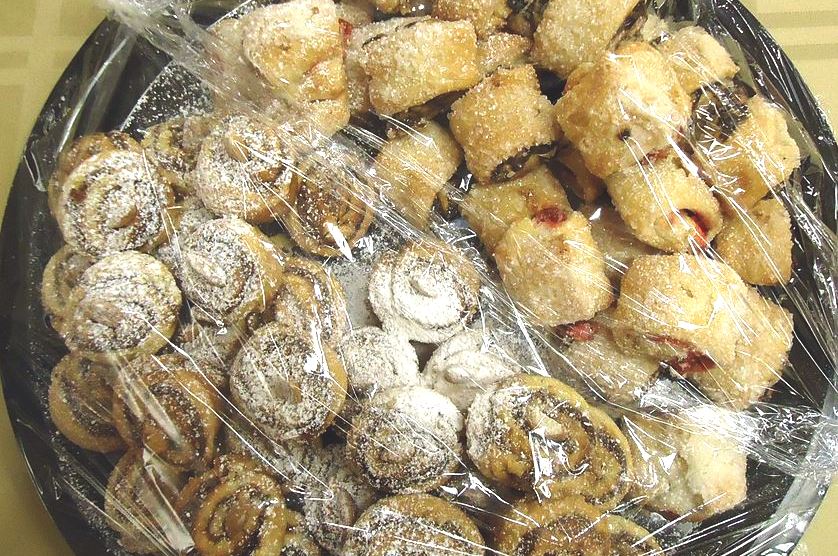
Preview Image: Plastic Wrapped Pastries


