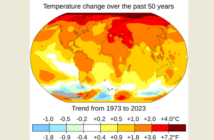
Northern Ontario is warming quicker than other parts of the country, according to the Environmental Commissioner of Ontario. And it doesn’t help that the government is making cuts to various climate change responses.
Ford’s Cutbacks:
In November, premier Ford announced the elimination of three independent officers of the Ontario legislature: environmental commissioner, child advocate, and the French languages services commissioner. The implications of this will reverb for years to come.
The environmental commissioner is the province’s “environmental watchdog.” The role of the commissioner is to advice the Environmental Bill of Rights, and to report on Ontario’s progress in reducing greenhouse gas emissions and improving energy conservation.
Ontario was on the right path toward more sustainable practice and conservation efforts. In 2016 the province recorded the lowest levels of climate pollution since they began keeping records in 1990.
Sudbury, A Case for Alarming Climate Change:
The effects of climate change are particularly being felt in Northern Ontario, which is warming faster than the global and provincial average. This is notably found in winter weather.
In Northern Ontario there are temperatures as cold as minus 35, and then plus two. The variance is a sign of climate change. There is cold weather, deep snow, followed by rain and then cold weather events again.
Wild fire events are becoming a bigger threat to the north than in the south, as they are starting to see more wild fires around the world because Forests are drying and fire seasons are longer.
Southern Ontario is feeling similar effects of climate change but they aren’t as visible or frequent as they are in the North.
The solution is simple: reduce fossil fuels, but practicing what we preach seems to be the biggest challenge. Since the province is going to lose their environmental watchdog, it doesn’t look good.