Lithium battery progress has largely stalled because of slow charging rates. Hence, these limit the driving range of electric automobiles. Moreover they also restrict the usefulness of smartphones and laptops while traveling or out shopping. The problem has always been because of the narrow cathode gateway. Now Oil Price just reported a breakthrough in this challenge.
How a Narrow Cathode Gateway Has Restricted Progress
Cathodes as we know them have very limited capacity to absorb inbound energy from a battery charger. Moreover, if we try to force the process, the friction causes the battery to overheat. However, until now, the industry has had to accept this limitation because we had no alternative.

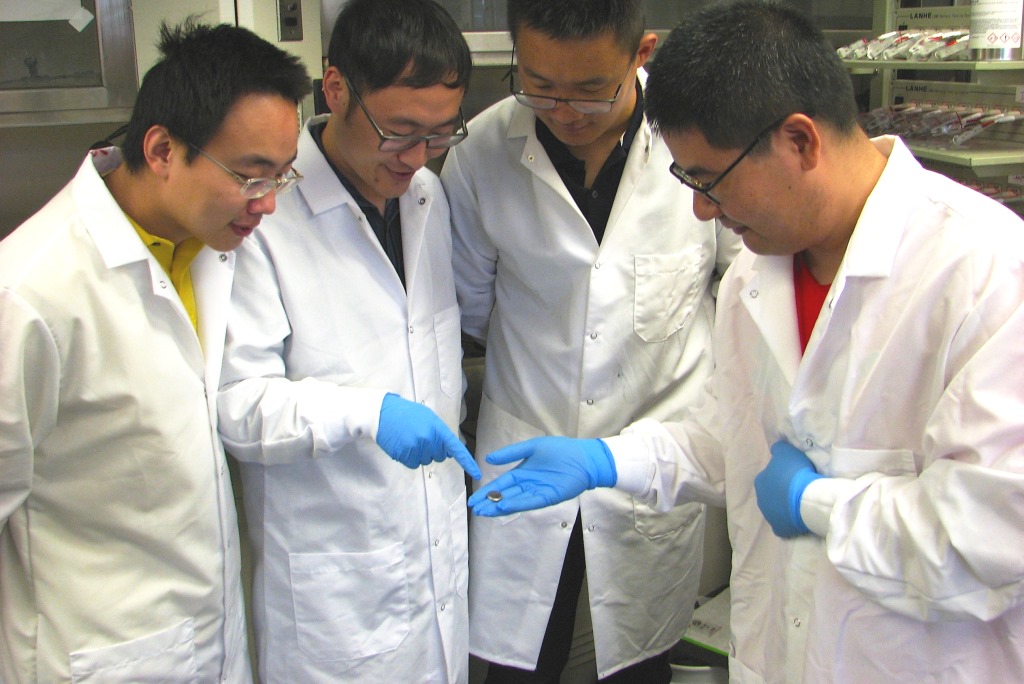
Therefore, we are excited by news just in of progress from the University of Maryland. Because its scientists have been working closely with Brookhaven National Laboratory, and the U.S. Army Research Lab. The team has succeeded in opening the cathode gateway wider. They say their new cathode material “could triple the energy density of lithium-ion battery electrodes.”
A Brief Summary of the How the Technology Works
“The normal materials in lithium-ion batteries are based on intercalation chemistry, a researcher explains. “This type of chemical reaction is very efficient. However, the cathode capacity is limited because it only transfers a single electron.
“By contrast, some compounds like ferric fluoride FeF3 are capable of transferring multiple electrons. This is through a more complex mechanism we call a conversion reaction.” The research team added cobalt and oxygen atoms to FeF3 nanorods using a process called chemical substitution. This overcame previous challenges of short recycling life.
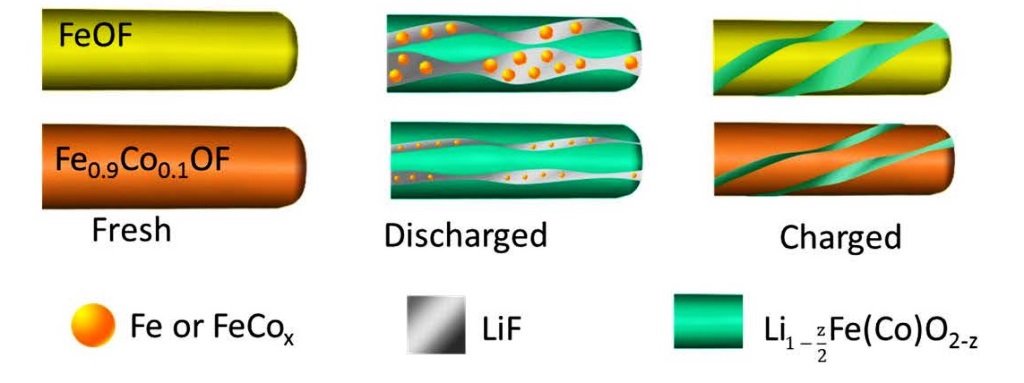
“We also performed advanced computational approaches based on density functional theory. First, this enabled us to decipher the reaction mechanism at an atomic scale,” a lead scientist explains. “Then this approach revealed that chemical substitution shifted the reaction to a highly reversible state. By reducing the particle size of iron and because of stabilizing the rocksalt phase.”
Related
Back to Basics: How Does a Battery Work?
Preview Image: Is this The Breakthrough We Wanted?