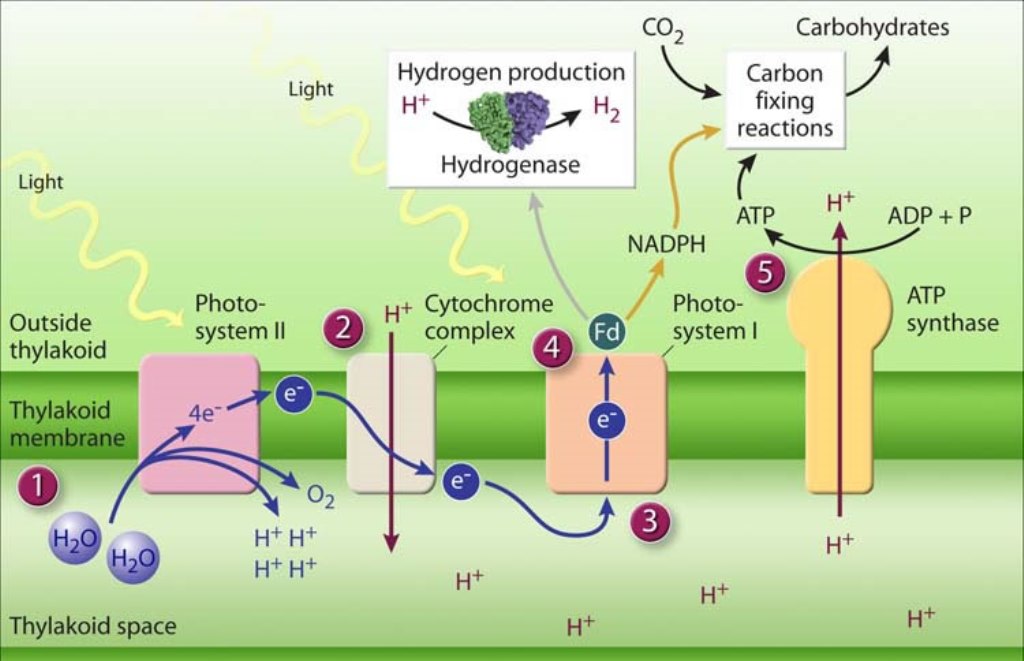
Plants, algae and some bacteria use photosynthesis to harvest energy from sunlight by converting it into chemical energy. Scientists are researching this natural process in the hope it will help us develop new forms of renewable energy. Photosynthesis in plants also converts the carbon dioxide we produce, and returns it into the atmosphere for us to breathe.
How Photosynthesis in Plants Maintained a Perfect Balance

Breathing creatures were in perfect harmony with Earth’s atmosphere before the first industrial revolution. Plants were the foundation of the food chain and they produced abundant clean, fresh air. Then Europeans disturbed the balance in the mid-18th century.
That was when they started creating steam by burning wood for their giant machines. This was like chopping off the branch they were sitting on. When they ran out of trees, they started burning coal. There were no longer sufficient trees to convert the carbon dioxide that began polluting the atmosphere. And then the population explosion began.
Is There Hope at the Tipping Point We Have Reached?
The rest is modern history. Burning fossil fuel, and the population explosion are adding more carbon dioxide to the atmosphere than photosynthesis in plants can process. Therefore scientists say we are at a tipping point. However, people who earn political power and wealth from oil and coal are ignoring this threat.

Scientists at University of Turku in Finland researched the possibility of using photosynthesis to generate hydrogen in 2018. Apparently, green algae can produce hydrogen in a few seconds in a two-stage process. First, it must be in an oxygen-free environment. And then it must be exposed to light. The researchers were able to sustain hydrogen production for several days
Other, related work is ongoing at University of California, Berkeley. There, scientists feed nano-wires into a system of microbes. These convert carbon dioxide into polymers and fuels using sunlight at experimental level.
Related
Earth’s Climate Derailed in Just 160 years
Electric Currents Generated From Algae
Preview Image: Photosynthesis Production of Hydrogen from Water