As we delve deeper into battery science, and the art of recycling spent lithium-ion materials in particular, we notice an interesting pattern. The focus seems to be shifting to using lower temperatures and less abusive chemicals. Scientists at Rice University have followed this trend, and discovered how plasma unlocks battery materials.
A Simpler Way to Separate Battery Materials
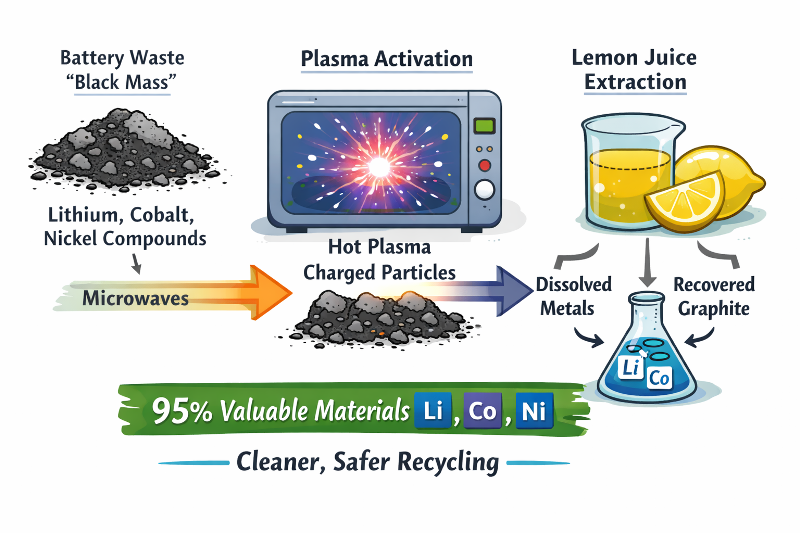
The first step to recycling lithium-ion battery materials is to grind them together into a powder scientists call black mass. This contains valuable lithium, cobalt, and nickel, as well as a quantity of graphite.
The challenge is to separate these substances economically, but this is proving difficult. You see, the materials are trapped in compounds that don’t break down that easily.
The current aggressive approach uses very high temperatures and strong acids to tear the compounds apart. This is expensive, energy-intensive, and environmentally harsh.
But the new Rice University method uses a different approach in which a simple plasma unlocks battery materials:
- First, they exposed battery black mass to microwave-generated plasma. This is a highly energized gas comprising charged particles.
- This plasma acted like a microscopic tool. It cracked open the complex metal compounds, making them far easier to access.
After the Plasma Unlocked the Compounds
A second, fifteen-minute phase followed after the plasma unlocked the battery materials:
- The Rice University scientists extracted the individual metals using citric acid from lemon juice at room temperature.
- In this way they were able to successfully recover nearly 95% of the valuable metals cheaply and effectively.
- They were also able to recover the graphite, and even enhance it so, it could be recycled in new batteries.
Using plasma to unlock metals in battery waste, and then collect these with citric acid could make recycling cheaper, cleaner, and more efficient. This could in turn reduce the need to mine new resources for electric vehicles and energy storage.
More Information