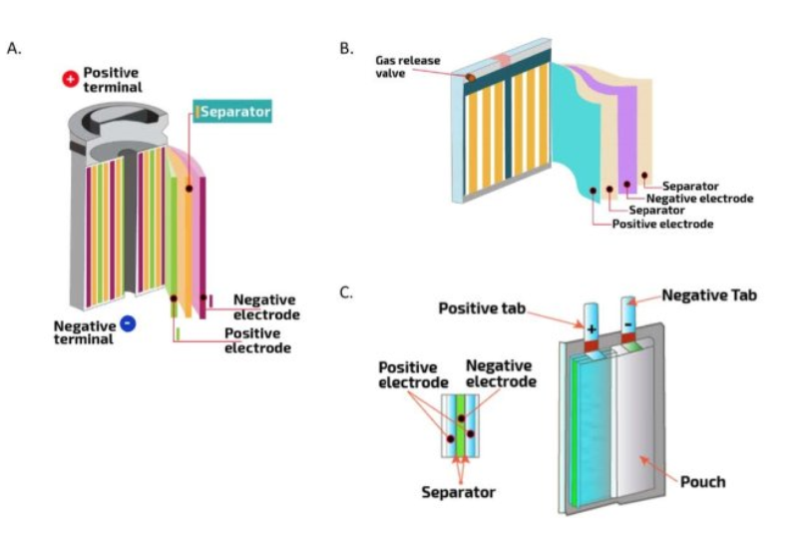
Recovering lithium-ion battery materials is becoming a major priority, because of the sheer number in electric cars. Each individual cell contains anode layers, cathode layers, and separators all in contact with electrolyte. Multiple numbers of these sets either roll, or stack together to form an individual battery. This arrangement complicates recycling the materials for re-use.
Recovered Lithium-Ion Battery Materials Are Hazardous
U.S. Environmental Protection Agency advises that most lithium-ion batteries become hazardous waste when disposed of. Indeed, they contain toxic materials that “may catch fire or explode if not handled carefully”.
These batteries are, however, safe if used correctly and sourced from a “trustworthy supplier”. The problem begins when they are damaged, or something goes wrong when a recycling company dismantles them.
Why We Must Recycle These Batteries – Carefully
Clearly, we should not dump used lithium-ion batteries in land fill sites. Their thin cases will corrode through, and release toxic chemicals which could pollute our ground water and our food chain.
Moreover, these batteries contain valuable materials, that we cannot continue mining from underground forever. They are not infinitely available, but they are essential if we are serious about achieving a renewable energy transition.
The Stages of Recovering Lithium-Ion Battery Materials
The first step in the process involves recovering used lithium-ion batteries at recycling collection points. There, these go through processes that identify them, and separate them for dismantling at specialist recycling centers.
However, batteries in larger packs for grid energy storage and electric vehicles, may enter separate battery repurposing chains. That is, if they still contain sufficient energy to power less-demanding applications.
The remainder of the lithium-ion batteries go to specialist recycling centers, where machines shred parts or all of them. Various processes recover the materials from this “black mass” for re-use. None of this is possible unless we, the consumers, hand over our used batteries for recycling.
More Information
Thermally Engineering Battery Recycling
Repurposing Materials in Secondary Batteries