It is of utmost importance to match a battery voltage to a device, before connecting them. If the device resistance is too high, then it may not work properly. Whereas if that impedance is too low, then the electricity will flow too quickly, and the device will overheat. Today, we share this phenomenon in the context of starter battery connections, and you may be surprised.
Short Circuits and Starter Battery Connections
A short circuit occurs when an electric current flows too fast through a circuit. We can test this theory with a wire of a particular impedance, by shortening it after taking a reading. In practice we use electronic resistors nowadays, to avoid having to coil lengths of wire.
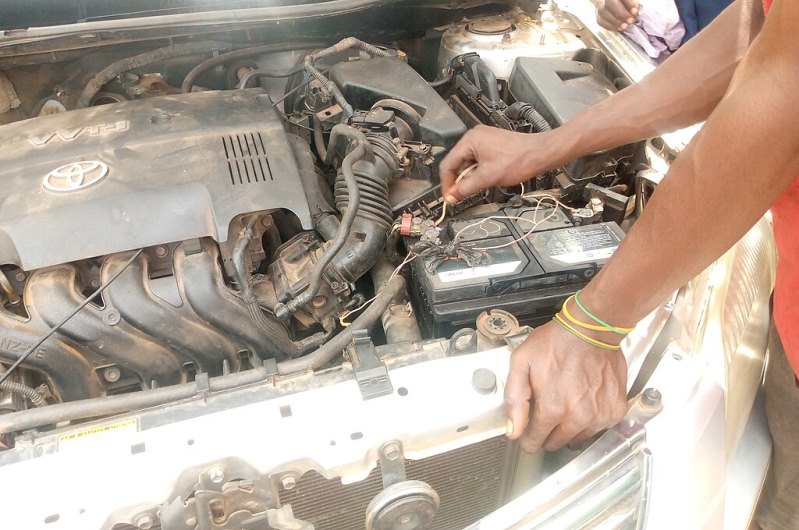
Having the right resistance before installing starter batteries is fundamentally important. This is because these devices deliver large surges of current, when they crank over internal combustion engines to start them. However, the starter motor can cope with the surge, because it has the right resistance.
But if we are foolish enough to short-circuit a starter battery across the starter battery connection terminals with an uninsulated metal tool, then we will receive a dangerous shock if we are touching the vehicle body. This is because our natural resistance is low, and the current passes instantly between our hands.
Starter Batteries Short Circuit Compact Crossovers
Popular compact crossover sports utility vehicles suffered eleven battery fires during the period 2013 to 2018. Those incidents all occurred under the hood where the starter batteries were located. The National Highway Transport Safety Administration (NHTSA) has only just closed the investigation.
All the offending batteries were either old, or aftermarket replacements. The NHTSA concluded the problem lay with with the battery hold-down bracket, and associated radiator support bolt, J-hook and battery tray. Apparently these all worked fine when the vehicles were new.
However, if the batteries were only loosely connected, then the battery could move, and short-circuit its positive terminal against the hold-down bracket. The NHTSA closed the investigation after the manufacturer completed an awareness campaign, with free inspections of starter battery connections.
More Information
Short Circuiting a Battery: What Happens Next