The batteries we write about in this blog, receive electrical energy from an external source. They store this in a process we call charging, and discharge it to power electrical equipment on demand. Any piece of equipment that does these two things is therefore a ‘battery’, including the Stensea water batteries we feature in this post.
Storing Electrical Energy in Water Batteries
Hydro power stations receive electrical energy, that they use to pump water from their lower to upper dams. When they release this water through a turbine later, this sends electrical energy to a utility grid. This example illustrates that it is possible to store energy in water.
The German-based Fraunhofer Institute for Energy Economics and Energy Systems Technology, developed an underwater storage vessel. They hope to install more vessels on the ocean floor later, but are trialing a prototype in Lake Constance, Germany first.
Lake Constance is at the intersection of Germany, Switzerland, and Austria. The body of water is 39 miles long, 9 miles wide at the broadest point, with a surface area of 207 square miles, and an average depth of 300 feet. The lake is an important source of drinking water that flows from melting glaciers in Switzerland.
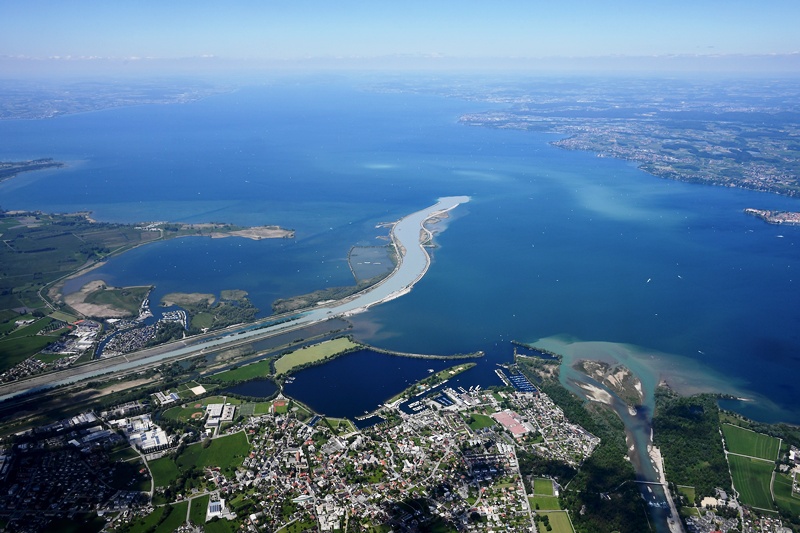
Manifestly, any idea of locating a hydro power station in this area of natural beauty, is beyond question. And then along came the Fraunhofer Institute, who proposed installing their water energy storage system in Lake Constance under water, as an alpha trial.
How the Stensea Water Battery Stores Energy
The Stensea system comprises a spherical storage tank, containing a pump turbine, a controllable valve, and an electronic operating system. An empty Stensea sphere corresponds to a fully-charged battery with full potential, and ready to do its work.
When water flows in and fills the sphere through the turbine, this sends electrical energy to the grid. In other words, the water discharges its potential, just like a battery. Recharging occurs during off-peak hours, when the turbine uses surplus energy from the grid to pump the water out.

The alpha trial was a great success, as you’ll discover when you follow the link to the pilot test report below.
More Information
Battery Hydro Hybrids – Untapped Opportunity
Hydro Global Battery Of The Future
Preview Image: Principle of Stensea Water Battery