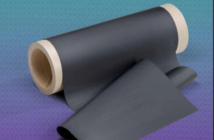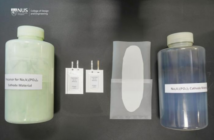
Graphene has been waiting in the wings for a while now, although it is a superb conductor and perfect barrier. To date the main impediments have been manufacturing cost, and supply. However these factors could change rapidly now we know we can make graphene from soybean cooking oil. Thus, this is the moment to peer ahead, and imagine a new normal with a supercapacitor graphene battery at center stage.
A Supercapacitor Graphene Battery for Air Transport

Elon Musk thought it could be the answer back in 2012. At the time, he labeled it ‘the next breakthrough’ because the potential is so immense it is sometimes difficult to imagine.
Now, scientists are speaking of a supercapacitor 10,000 times more powerful than a conventional battery. Then our green journey in low carbon cars could really begin in earnest! Just imagine someday when we no longer need carbon fuel.
A Man at the Center of Supercapacitor Research

Han Lin arrived in Melbourne from China’s Fujan province in 2009 to do his physics PhD. He impressed to the extent he remained at the Swinburne University of Technology ever since.
His specialisms are experimental physics, atomic, molecular and optical physics, and optics. Because of this, he is in perfect space to exploit graphene
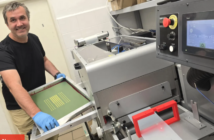
Scientists have found it difficult to assemble flaky nano-sheets of graphene together in order to create a dense core. Han Lin and his team are increasing power to weight ratios by laser printing their graphene. This produces ‘interdigital structures’ where ions have a far shorter distance to travel as they charge and discharge.
Future Uses for a Supercapacitor Graphene Battery
Han Lin’s sponsors want to focus on alternatives to AA batteries. They want these to be flexible for use in clothes and watch straps. The university announcement speaks of an ‘eco-friendly’ battery that can charge in seconds millions of times. We really do appear to be on the verge of a practical supercapacitor graphene battery.
Related