Zinc-carbon batteries trace their history to Leclanché cells, after Carl Gassner introduced a zinc sheet-metal-anode casing. And subsequently teamed this with a graphite paste electrolyte. Since then, zinc batteries became part of consumer life, although lithium dominates with greater power and density. More recently though, the zinc battery future has brightened again.
Will Abundant Zinc Ensure the Battery’s Future
Demand for the scarce lithium metal is showing signs of exceeding supply, as we move towards a circular renewable economy. This means there is a limit to the usefulness of the metal, especially in view of the risk of overheating.
These factors point to the need for an alternative storage platform. Cosmos suggests the solution could lie in more efficient, longer-lasting, rechargeable zinc batteries.
“Zinc has a strong battery track record,” explains Dapeng Liu, a battery researcher at Beihang University, China. But how could the zinc battery future roll out? It has certainly embedded itself in our energy world, with a one-third market share in some sectors.
A Range of Future Applications for Zinc
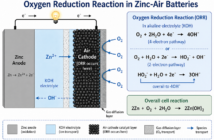
Zinc battery performance may have improved over the past ten years. Although the rechargeable version still fails to meet large commercial requirements, because of low density and shorter cycle life. But zinc-air flow batteries are performing well, and may already have twenty-to-thirty-year lifespans.
PV Magazine paints a rosy picture for zinc batteries, some of which could be 50% cheaper than lithium alternatives. The stable material is versatile, they say. Moreover, it is ideal for small batteries, because there is far less need for safety packaging than lithium batteries. Josef Daniel-Ivad, manager of Zinc Battery Initiative is already seeing beyond the now.
Zinc-metal batteries are performing well in data centers he says, and server farm clusters too. The movement needs a spark, a challenge to move forward from relative obscurity. Could a dawning realization of zinc resources in over 50 countries make a difference? Create a breakthrough to a supply chain that is secure and openly available.
More Information:
New Look Into Battery Carbon Binder Domain