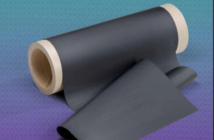
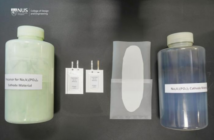
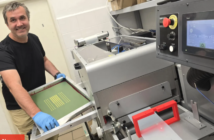
Alessandro Volta assembled the first battery in 1800 using zinc as anode, and copper for the other electrode. Zinc was a mainstay for the battery industry for close on to two centuries despite a relatively low density. Since then, lithium-ion overshadowed it, except in small consumer applications. However, zinc is showing signs of a comeback, since the U.S. Army inspired a water-based zinc battery design.
Why Does the U.S. Army Need a Water-Based Zinc Battery?
The American Army is not particularly generous when it comes to giving away strategic secrets. However, we do know it appointed researchers from the University of Maryland and the National Institute of Standards and Technology for a battery project. It may have also contributed funding for the project. Information is scanty, but here is a related video.
Perhaps army team leader Dr Kang Xu gave the game away when he mentioned ‘public concerns’ including lithium battery car fires. Not to mention the notorious incident when a lithium battery grounded the entire Boeing Dreamliner fleet after an explosion. “The safety hazard of lithium-ion batteries takes root in the highly flammable and toxic non-aqueous electrolytes used therein,” he believes.
“The batteries of aqueous nature thus become attractive, if they can be made rechargeable with high energy densities. Zinc is a natural candidate.” The new water-based zinc battery draws on experience the team gained developing a lithium-ion version. However, Dr Kang Xu believes the new invention is superior for the following reasons.
“Water-based batteries could be crucial to preventing fires in electronics, but their energy storage and capacity have been limited – until now,” Dr Kang Xu explains. “For the first time, we have a water-based zinc battery that could compete with the lithium-ion batteries in energy density, but without the risk of explosion or fire.”
There is talk in the research laboratory of having found a route to the ‘Holy Grail of Batteries’. This is not the first time we have heard the claim, and we incline to believe it will not be the last.
Related
Is Urea the ‘Holy Grail’ of Batteries?
Could Zinc Replace Lithium-Ion Someday?
Preview Image: Mixed Aqueous-Apriotic Battery
Video Share Link: https://youtu.be/REf_Z5x2eUQ