Lithium-ion batteries transformed portable electronics. This was because they could store substantial energy without the weight of many older rechargeable technologies. But what about the battery fires that changed lithium-ion design?
High Energy Density Created An Engineering Challenge
But at the same time the high energy density that made them useful , also created a difficult engineering challenge. What happened if something went wrong inside the cell?
A lithium-ion cell contains closely packed materials separated by a thin insulating separator. The separator must allow lithium ions to move while preventing the electrodes from touching.
Heat Builds Up Following An Internal Short Circuit
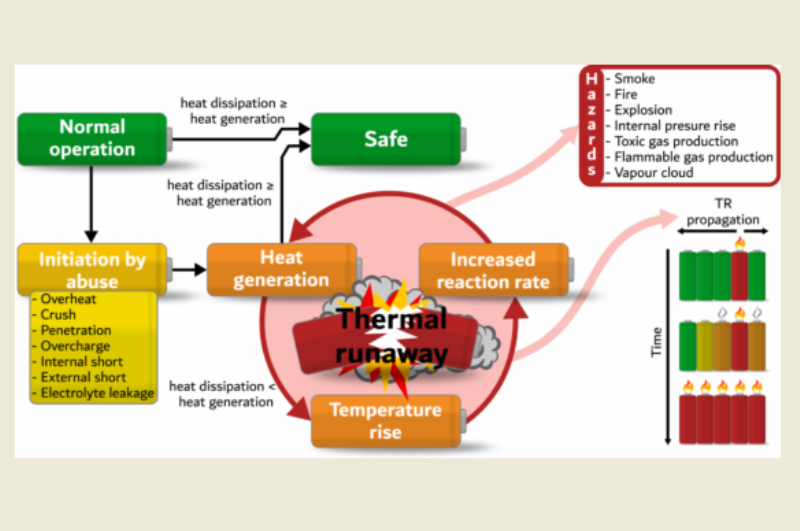
If an internal short circuit develops, then heat can build rapidly. Flammable electrolytes can then lead to a thermal runaway reaction.
This became especially visible during the notebook-computer battery problems of 2006. Dell recalled about 2.7 million notebook battery packs in the United States after reports of overheating and property damage.
Other manufacturers subsequently participated in replacement programs involving batteries containing affected Sony cells.
What Caused The Battery Fires That Changed Lithium-Ion?
The battery fires that changed lithium chemistry were the result of microscopic lithium metal particles inside some cells. Under certain conditions, a short circuit could produce overheating and flames. Sony subsequently introduced additional safeguards.
These incidents helped demonstrate why lithium-ion safety could not depend on the chemistry alone. Battery design had to include several layers of protection.
Modern research has since then concentrated on safer separators, improved electrolytes, thermal management and protective electronics. Some separators close their pores when temperatures rise, restricting ion movement and helping to stop a dangerous reaction.
The fires did not end lithium-ion development. Instead, they exposed weaknesses that engineers had to address, as batteries became smaller, more powerful and more widely used.
More Information