Every battery, from an earbud to a family car, depends on tiny particles inside. Although most us may have heard the word, few of us actually know what these things called ‘ions’ do in our batteries. Fortunately, the idea is much simpler than it sounds.
We Live In a World Comprising Microscopic Things
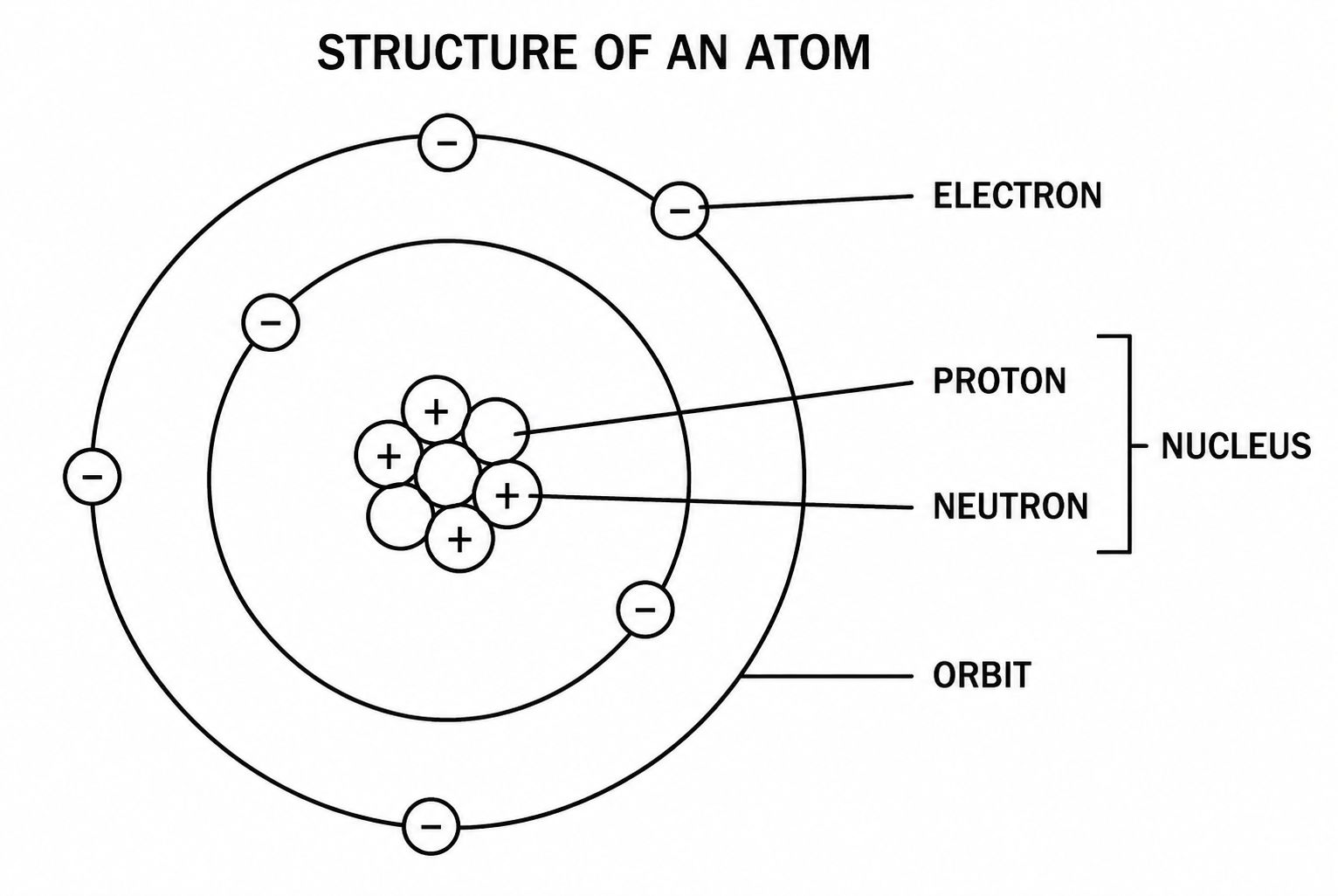
Everything around us is made from things called atoms. An atom contains positively charged protons at its heart, and negatively charged electrons moving around the outside. Normally, an atom has equal numbers of protons and electrons, making it electrically neutral.
Where These Things Called Ions Fit Into This Atomic World
An ion is simply an atom that has gained or lost one or more electron. If it loses electrons, it becomes a positive ion. If it gains electrons, it becomes a negative ion.
Because the numbers of protons and electrons are no longer equal, the atom now carries an electrical charge. That in a nut shell is where these things called ions fit into our atomic world.
Charged Atoms Play a Pivotal Role Inside a Battery
These charged atoms play a pivotal role inside a battery. They move through the battery’s electrolyte, while electrons travel through the external wires to power your device.
Both movements are essential. Without electrons, nothing outside the battery would work. Without ions, the electrons could not keep flowing. One hand washes the other, chemically speaking.
This Balance Allows Battery Charging And Discharging
Different batteries use different kinds of ions. Lithium-ion batteries rely on lithium ions. Sodium-ion batteries use sodium particles. Lead-acid batteries depend mainly on hydrogen and sulfate ionic particles moving within the electrolyte.
So, although these particles are far too small to see, they quietly perform one of the most important jobs inside every battery.
In the next article, we’ll answer another interesting question. Where do these ionic particles come from in the first place?
More Information From Our Battery Blog