Staffordshire Fire and Rescue Service in England, were reminded what happens when lithium batteries get wet inside the other day. This was after they attended an emergency call on a rainy day, and found a motor home and two sheds burning.
Investigation suggested a toy hover board next to the motor home had started the blaze. The incident commander remarked, “A wet lithium-ion battery is a safety hazard. Water can cause internal short-circuiting, rapid overheating, toxic gas release and fire”.
How Did Water Get Inside the Lithium-Ion Battery?
Water is not meant to get inside lithium-ion batteries in the first place, because their casings are sealed. The problem begins when this seal fails for one of several reasons:
- Bad manufacturing standards and quality control allowing tiny leaks.
- Damage to the battery casing from punctures, drops, and internal swelling.
- Moisture from flooding, rain, or high humidity penetrating weak points.
- The passage of time, as aging and corrosion weaken the battery casing.
Any of these events can over-rule the battery fundamental that everything must stay absolutely 100% dry inside.
When Lithium Batteries Get Wet Inside
Several unfavorable conditions can develop when lithium batteries get wet inside. What was normal becomes risky, as moisture reacts with the battery electrolyte.
If the battery is lithium-ion, then the lithium-salt electrolyte can produce hydro-fluoric acid and other harmful byproducts. Any of the following situations could follow:
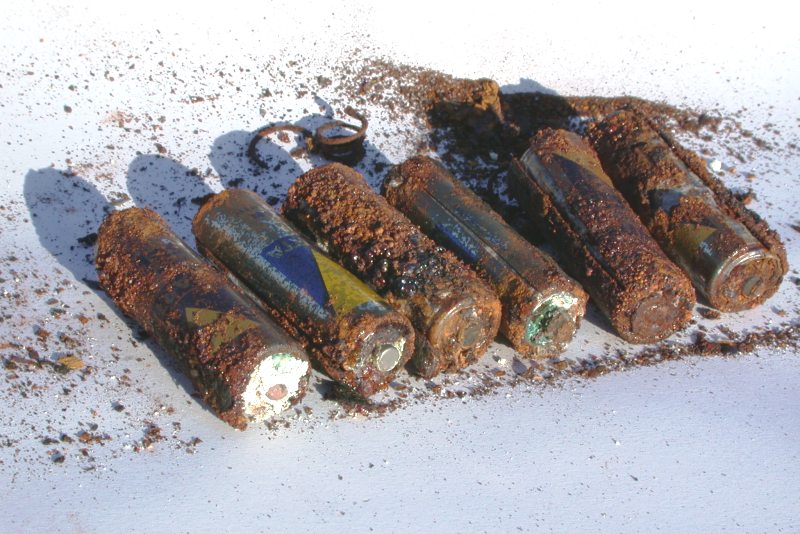
- The parts inside the battery could start to corrode.
- Undesirable chemical reactions could generate heat.
- Gas could start accumulating, swelling the battery.
- The separator keeping the electrodes apart could fail.
Once the heat starts building, a thermal runaway reaction could follow. It’s possible this is what happened to the ‘hover board’ self-balancing scooter battery during the rain. Although in reality we will probably never know for sure.
More Information
Flame Resistant Battery Casings in Transit
Eco-Friendly Battery Housings at Graz