

Lithium-ion battery prices are falling dramatically, as production volumes sky-rocket, but they are not perfect. When lithium-ion batteries charge slower on chilly winter mornings, we should breathe in before we tap our fingers in frustration. The night that passed was cold, and they need to rest until they warm a little. Except some us can’t wait, because we have work to do.
Slower-Charging Lithium-Ion Batteries in Winter
Wesley Chang is an assistant professor of mechanical engineering and mechanics at Drexel University, Philadelphia. He has researched and written quite extensively about lithium-ion chemistry’s two big drawbacks. These are slowing down when it gets colder, and an inclination to overheat without proper battery management systems.
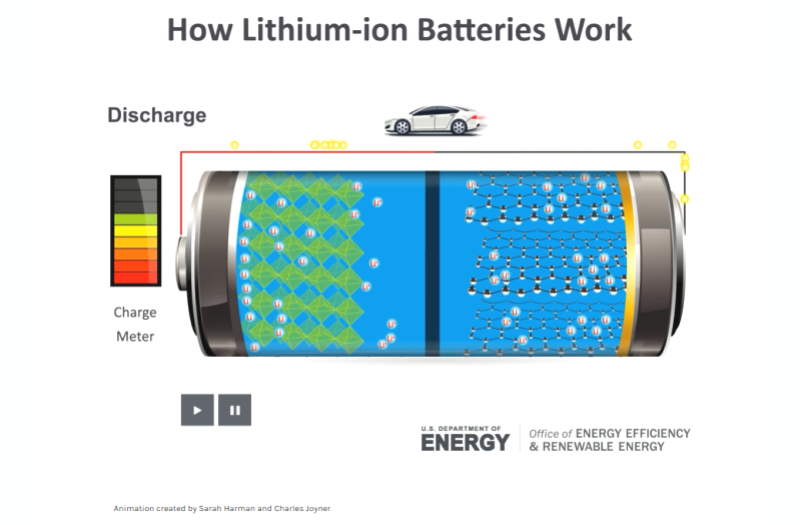
Lithium-ion batteries contain four key components, including electrodes (lithium metal, graphite carbon), separator, and liquid electrolyte. This combination stores electrical energy in the form of atoms our scientists call ions, with non-zero charges. When we start charging an electric car these ions become active.
As we charge a lithium-ion battery, electrons move through an external circuit, while compensating ions flow through the internal electrolyte. This is how a battery receives and delivers electricity while it remains in balance electro-chemically.
How Climate Affects Lithium-Ion Battery Performance
Whenever we boil a liquid it bubbles, because we have excited the atoms in simple terms. However, when a river freezes solid, that water is unable to flow anymore. This simple analogy helps us understand what’s happening when lithium-ion batteries charge slower on chilly winter mornings.
To extend this analogy further, the liquid electrolyte in lithium-ion batteries thickens as it grows colder. This makes it more difficult for the ions to flow through it, and insert into the receiving electrode. The flow of electricity through the external circuit correspondingly slows down too.
This is why we recommended we breathe in before we tap our fingers in frustration. There is nothing we can do except pre-warm the chemistry when lithium-ion batteries charge slower on chilly winter mornings. Or slip back into bed, and check the weather forecast while we wait for nature to catch up.
More Information
Indium Lets Batteries Charge Much Faster
Choose the Right Battery Charger Here’s How



