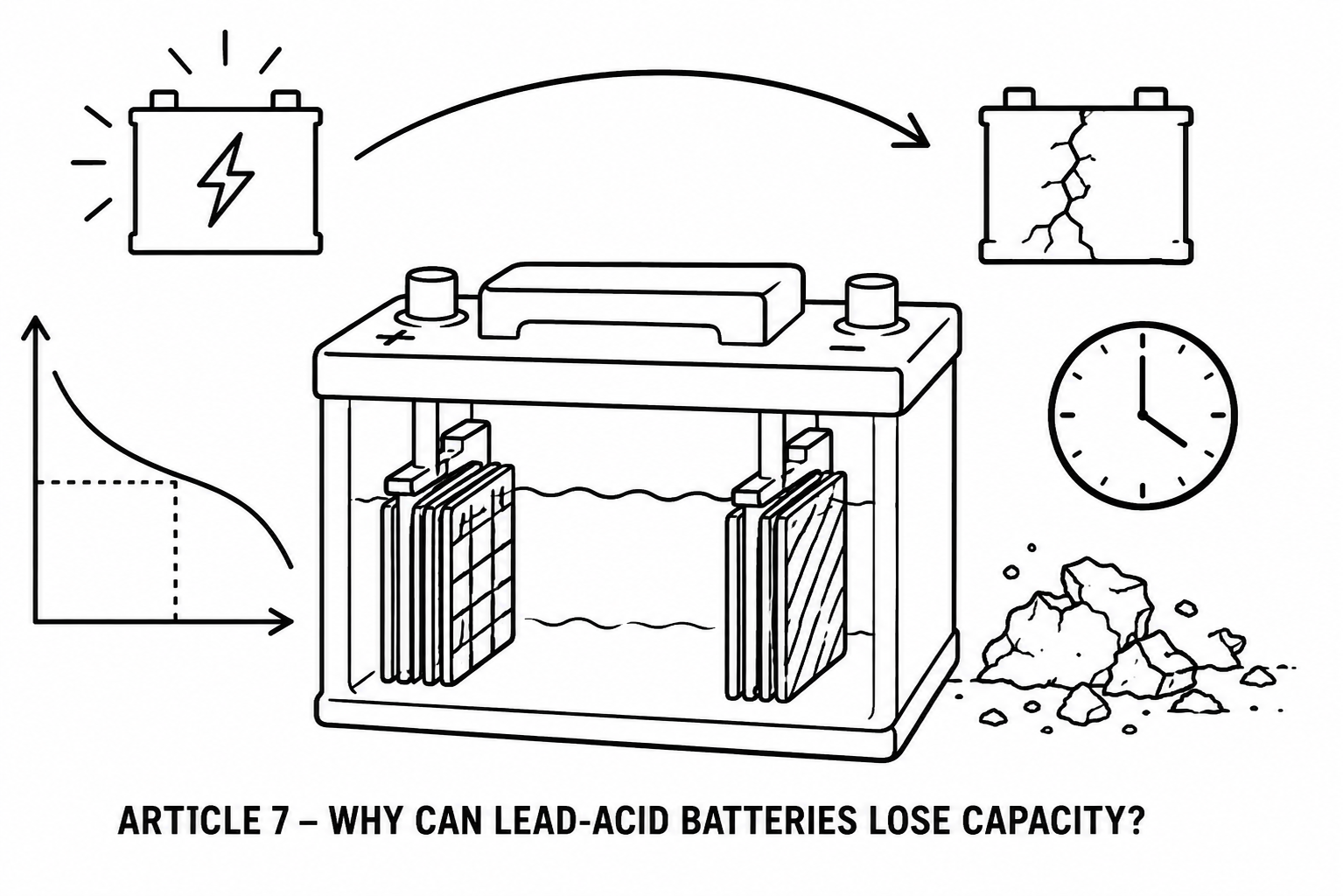
A new lead-acid battery can store and deliver a useful amount of energy. Over time though, its capacity can fall. This means the battery cannot hold or deliver as much energy as it once could. Let’s discuss why lead batteries lose their capacity.
Sulfation Robs Lead-Acid Batteries Of Their Capacity
One important cause is sulfation. During normal discharge, lead sulfate forms on both plates. When the battery recharges, much of this sulfate changes back into the original plate materials.
Leaving a Battery Partly Discharged For a Long Time
Problems can arise when a battery remains partly discharged for long periods. Some of the lead sulfate can become harder and more difficult to convert during charging. It can gradually cover parts of the plates, and reduce the area available for the battery’s chemical reactions.
Repeated Deep Discharging Is Bad For Lead Batteries
Repeated deep discharging is another reason why lead batteries lose capacity. Each discharge and recharge changes the materials on the plates. Repeating this process many times can cause some active materials to weaken, drop off the plates, or become less effective.
Excessive Heat Robs Lead Acid Of Its Power
Heat can also shorten lead battery life. High temperatures speed up chemical reactions inside the case. Although this may temporarily improve performance, it can also accelerate the ageing of the plates and other internal components.
Corrosion Is Bad For These Classic Batteries As Well
A battery can also lose capacity because of corrosion. The positive plate and its supporting structure, gradually deteriorate during normal use. Eventually, this damage can prevent the battery from delivering the performance it once provided.
The Way We Use a Battery Is In Our Hands
The way we use a lead battery also matters. Leaving it discharged, repeatedly, draining it very deeply, or keeping it at an unsuitable temperature can all reduce its useful life.
Lead Acid Battery Capacity Loss Is Multi-Dimensional
Capacity loss is not the result of one single problem. It develops from several changes taking place inside the battery over time.
Understanding these changes helps explain why regular charging and sensible use can make such a difference. Remember, a lead-acid battery may look unchanged from the outside, while important changes are gradually taking place inside the case.
More Information From Our Battery Blog