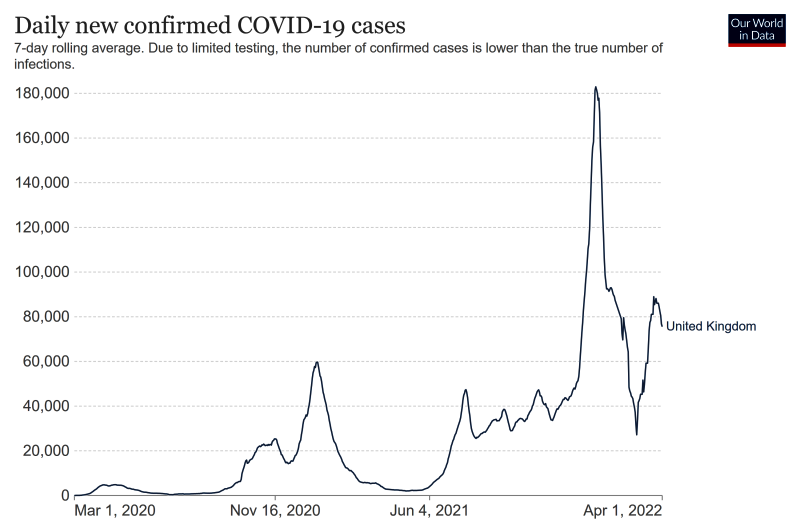
The UK Office for National Statistics reported some one-in-sixteen people in UK had COVID-19 in the week ending March 10, 2022. Despite this, hospitals coped and the nation got on with their business. Like you we wondered why so many catch COVID-19 again. Has this something to do with Omicron, or is there a deeper reason?
Omicron Helps Explain Why So Many Catch COVID-19 Again
We turned to the BBC for advice, because it is right there on the spot. Their head of statistics Robert Cuffe agrees Omicron is partly behind the outbreak. That’s because it is “better at sneaking past defenses built on old infections”, he says. However repeat bouts are “less likely to make people very ill”.
He goes on to explain most people will catch COVID-19 twice, as their immunity fades and the coronavirus evolves. This already happens with other coronaviruses causing common colds many times in our lives. However, repeat COVID infections were very rare in the early days of the pandemic. What is different now?
The Difference Is … Well the Omicron Variant is Different
BBC’s Cuffe thinks many more people catch COVID-19 again in UK, because Omicron is a jump ahead of our immunity. In fact he goes as far as defining many as “ten-times more” likely. However, and this is where its gets interesting younger people and unvaccinated folk are more likely candidates.
It is beginning to seem as if a combination of an Omicron infection and vaccination could turn out to be our strongest defense. That’s because immunologist Prof Eleanor Riley believes our symptoms should largely then be mild. In fact, our greatest challenge may well be not infecting other more vulnerable people.
We get further confirmation of this from the fact there are fewer people in UK hospitals now than was the case in January. The government is hoping a spring booster vaccine rollout will top up UK immunity. But that may in turn depend on what Omicron does next. A month is a long time in a pandemic.
Breaking News
Future View of Living in a Modern Epidemic
Major FAQ’s About Vaccinations for COVID