We’ve always just assumed that lithium ions somehow find their way between electrodes, and back again. We knew that some of them mysteriously became lost and never returned. When scientists told us this loss accumulated and eventually caused lithium batteries to fail, we accepted this as part of life. That reality may have potentially changed forever.
Scientists at DOE Reveal New Lithium Batteries’ Secrets

Researchers at the National Accelerator Laboratory made a remarkable announcement on September 17, 2018. They had used very powerful X-rays from an accelerator to observe ions traveling in lithium batteries for the first time.
“We had previously thought that lithium was anisotropic,” Assistant Prof William C. Chueh at Stanford told Popular Mechanics. In other words it has a natural preference for how it moves. “But now we know it plots a messy course, leading to hot spots in areas in the battery.” Moreover we know that heat is a battery’s worst enemy. This is the first time we have seen this happening at a nanoscale.
The ‘Popcorn Effect’ in Batteries Revealed
“Previous models don’t really explain how the liquid interacts with the solid, Prof Chueh continues. “Kind of like in space, we think about how the particle behaves in a vacuum. But a battery doesn’t operate in a vacuum – it operates in a liquid.”

A press release in Eureka News explains how ions in lithium batteries flow from a liquid solution into a solid reservoir, an electrode. Once there, the lithium “can rearrange itself, sometimes causing the material to split into two distinct phases”. This causes a ‘popcorn effect’ similar to when oil and water separate. “The ions clump together into hot spots that end up shortening the battery lifetime.”
Ideas are popping through our minds like roasting popcorn. Prof Chueh is thinking of designing selective transport channels, to keep ions in line like soldiers marching in columns of three as we imagine.
Related
Would Lithium Batteries Survive Hurricanes?
The SEI Layer Inside Lithium Batteries Explained
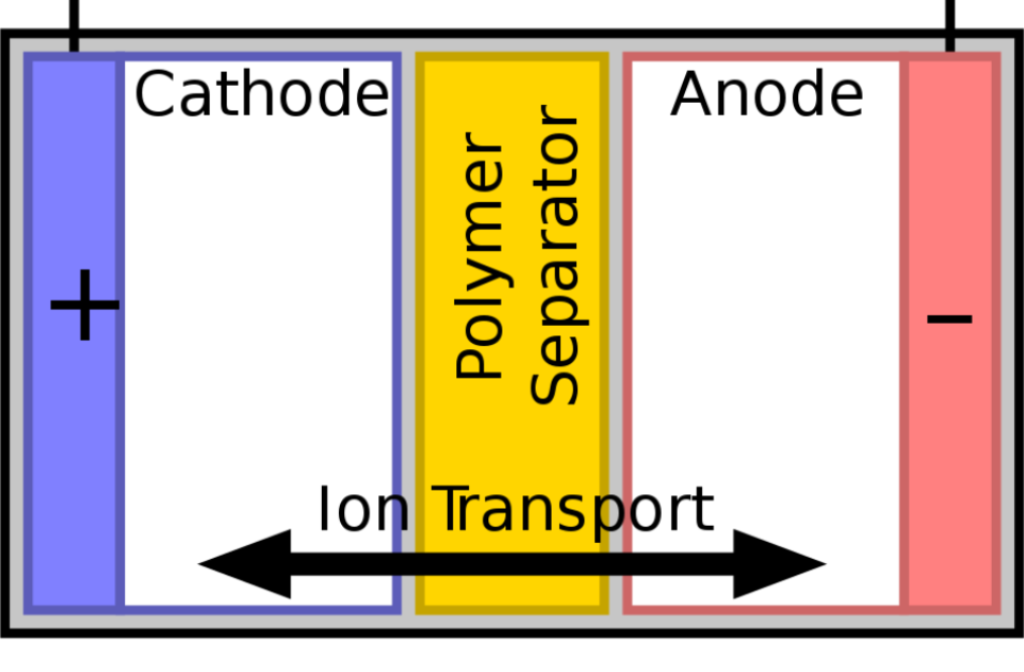
Preview Image: Battery With Polymer Separator