The New Dual-carbon EV Battery, also-called “RydenDual Carbon Battery” will revolutionize the world of battery technology by extending the over-all life and charge time.
Power Japan Plus (PJP) is working with researchers at the Kyushu University to perfect this dual-carbon system by integrating less-expensive cathode and anode components following up to 20 times faster charging rates compared to traditional lithium-ion batteries.
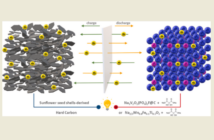
Dual-carbon batteries were first proposed in 1978, but required decades of more research and development to achieve reliability. The New Dual-carbon EV (electric vehicle) batteries are manufactured using a similar process as Lithium-ion batteries, but unlike the conventional Lithium-ion cells that have a carbon anode and a cathode consisting of cobalt, nickel, and manganese, a dual-carbon cell has a carbon cathode as well as an anode. They have 4 cell voltage and are less expensive because of the abundance of carbon.
Lithium-ion (Li-ion) batteries vs New Dual-carbon EV batteries
Lithium-ion (Li-ion) batteries have been the preferred choice for portable electronics, electric vehicles and battery-based grid level storage. Li-ion suffers from thermal events because they are made from earth materials. They take a while to charge and have a limited number of charging cycles. EV and Hybrid manufacturers warrant their batteries for 100,000 miles or eight years, and replacements are very costly.
The New Dual-carbon EV batteries eliminate the external cooling system integrated into the EV battery pack as it has no thermal change when charging or discharging: it does not get hot so it is unlikely to catch fire, and you need not worry about thermal runaway.
Nissan Leaf currently projects a four-hour empty-to-full charge cycle, while the Ryden Dual-carbon battery system only requires 12 minutes. The New dual-carbon EV battery does not require any electrical governors that avoid total discharge, reducing the battery life cycle in most other batteries. It accepts a complete 0/0 discharge.
The dual-carbon EV battery is compliant with 18650 cell packaging so it can be used for EV purposes. While other consumer grade cells can give a 300-mile range, the Dual-carbon EV battery could last up to 900,000 miles. The batteries can completely discharge without damaging the batteries and can withstand 3000 recharge/discharge cycles with negligible capacity loss.
Related articles: