

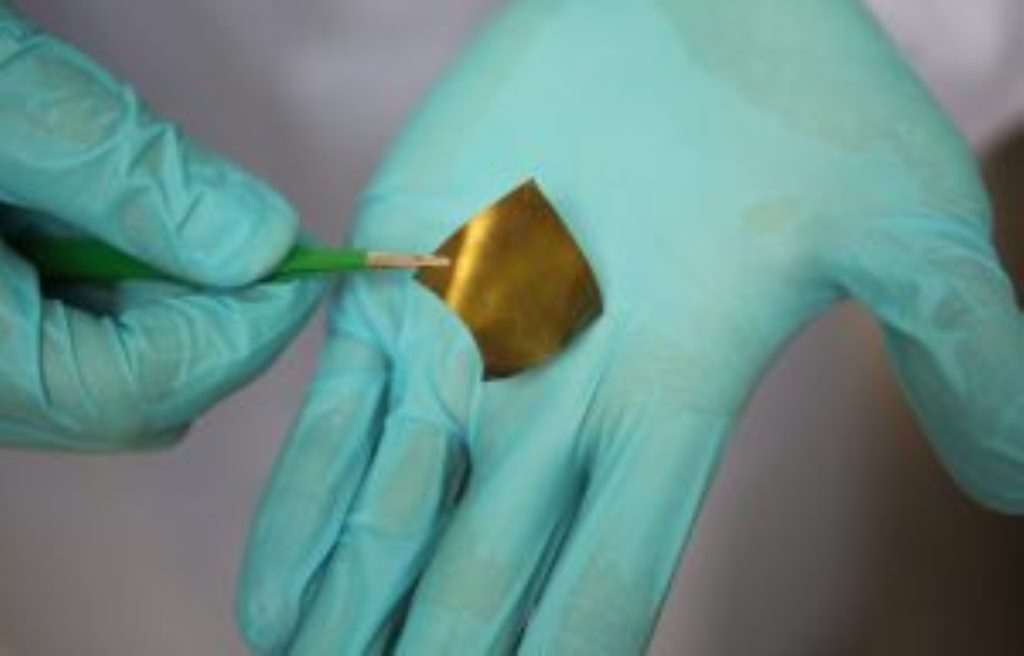
Scientists at the University of Michigan have made a conductor from multiple layers of polyurethane and gold nanoparticles. Their remarkable design maintains its electrical conductivity even when stretched to a strain of more than 300 per cent. Therefore, their flexible conductible component could be a breakthrough for wearables and medical devices
How the Flexible Conductible Component Works
Nicholas Kotov at the University of Michigan and his colleagues have come up with a unique idea. First, imagine a solid tube made up from multiple layers of polyurethane just a little like the sections of a caterpillar that allow its body to flex. However the polyurethane sheets are much thinner.
Now this is the body of the flexible conductible component. But how do you get the material in foam sponges and garden hoses to conduct electricity? Nicholas Kotov’s invention seems simple in hindsight except it took a genius to think it up. He inserted layers of negatively-charged nanoparticles of gold between the positively-charged polyurethane sheets of his flexible conductor.
Watch This Amazing Potential In Action
These Gold Nanoparticles Organize into Pathways and Conduct
The gold nanoparticles self-organize into aligned pathways as the conductor stretches,” explains Donna Lu in New Scientist. This allows them to continue conducting electricity. However, this is only just the beginning, says University of Michigan’s Nicholas Kotov.
“That’s because we could use our flexible conductible component in wearable or implantable devices too. As well as in soft robots with flexible legs or tentacles,” he explains. Moreover, he is confident he could modify the mechanics to suit implantable devices. We look forward to seeing his conductors in health care devices, electronic skin, artificial muscles, and neuro-prosthetic implants soon.
We have no commercial interest in this breakthrough as we make solid, three-dimensional lead-acid batteries. Nonetheless, this work is remarkably interesting in terms of the body of knowledge we write about here.
Related
What Is An Electrical Conductor
New Technology for Wearable Electronics
Preview Image: Stretchable Gold Conductor Grows its Own Wires
Video Share Link: https://youtu.be/KQ7_TPSSfys


