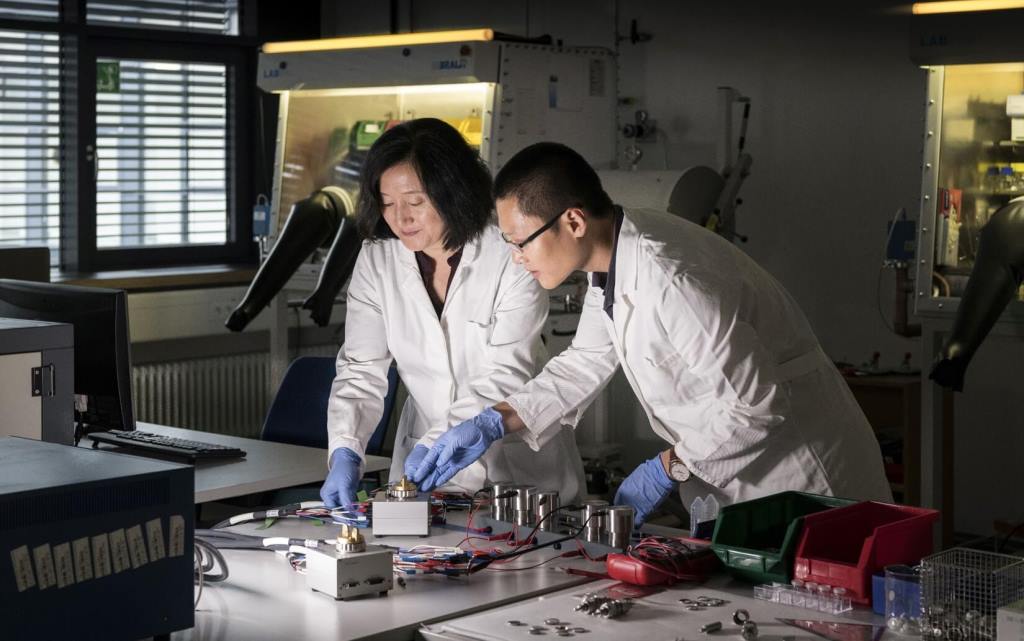
Calcium is an abundant alkaline earth metal. Its ions perform vital electrolytic roles in physiological and biochemical processes of organisms and cells. Scientists at Helmholtz Institute Ulm in Germany have created a new calcium salt. There appear to be considerable calcium battery benefits over lithium ones, although the work is still at laboratory stage.
Greater Safety and Other Calcium Battery Benefits
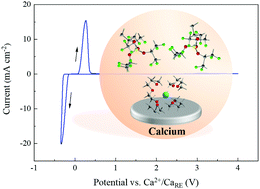
The new synthesized salt could introduce a cheaper and safer alternative to lithium, according to journal Nature. Lithium batteries have a semi-random tendency to overheat and catch fire. Moreover, they contain toxic and increasingly expensive cobalt and lithium.
Other calcium battery benefits – at least on paper – include greater sustainability and safety. However, researchers have until now sought in vain for an effective calcium electrolyte through which the electricity flows in a battery. Now lead researcher Zhirong Zhao-Karger and his colleagues at Helmholtz Institute Ulm have achieved a breakthrough. This may eventually bring commercial calcium batteries to market.
The Breakthrough Zhirong Zhao-Karger Et Al Achieved
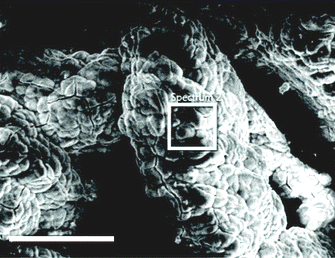
The German research team merged a calcium compound and a fluorine-containing compound into a new type of calcium salt. This substance conducts electricity better than any other known calcium electrolyte. Moreover, it also shuttles the ions at a higher voltage rating.
These calcium battery benefits and other characteristics combine to suggest a bright future for this new technology. Calcium could play an important role in future industrial-scale storage of solar and wind energy. That’s because the silvery, very ductile metal accepts deformation without losing toughness while remaining pliable, not brittle.
This future ‘wonder battery material’ comprises 3% of Earth’s crust, and is the third most abundant metal after aluminum and iron. Current major producers are China, Russia, and United States in that order. Therefore, it has potential to replace lithium batteries.
Related
Could Calcium Metal Become Next Lithium?
Adding Salt to Lithium Metal Electrolyte
Preview Image: Scientists at Helmholtz Institute Ulm in Germany