There’s been great enthusiasm in the media regarding the rollout of battery storage. And so there should be, because naturally renewable energy and climate depend of it. But how successful are we really, outside of home battery systems and electric cars, we wondered? We decided to investigate the status of utility-scale battery storage in the United States.
Total U.S. Utility-Scale Battery Storage Installations
There were almost 500 grid scale battery sets in operation at the end of 2018. Therefore they had almost doubled over the previous year. The overwhelming majority used lithium-ion, although flow batteries made their appearance in 2017. The energy industry and the public are now growing accustomed to the distinctions between power generation and storage.
Utility-Scale Battery Storage 2013 – 2018: U.S. Energy Information Administration
We rate power stations by their instantaneous output in megawatts. Whereas we describe utility-scale battery storage in terms of maximum immediate power available (megawatts), and what we can store and discharge in one cycle (megawatt-hours). By the end of 2018 the United States had 862 megawatts of operating battery storage. This stacked up as 1,236 megawatt-hours of battery energy.
New and Old Technologies Straddling Lithium-Ion
Lead-acid batteries hardly feature because of bulk, although there are exceptions outside lithium-ion. Vanadium flow batteries are waiting in the wings. However, 2017 saw two small systems going in with 4.4 megawatt, and 16 megawatt-hour capacity.

A grey beard nickel-based system has operated in Fairbanks, Alaska since 2003. Although this only provides short-term support to the grid of up to 15 minutes. Moreover, power capacity is 40 megawatts, although energy capacity is only 16 megawatt-hours. The U.S. Energy Information Administration expects total utility-scale battery storage to reach 2,500 megawatts by 2023. However, this assumes all existing systems continue operating.
The American Public Power Association says the U.S. had 1.2 million megawatts generation capacity in March, 2017. Natural gas provided 43%, followed by coal at 23%. Nuclear delivered approximately 20%. The remaining 14% came from hydro, wind, solar and biomass. Therefore, we have a long road to travel to our zero carbon economy.
Related
Vanadium Flow Finds a Home in Grid Storage
Which Battery is Better for Solar Storage
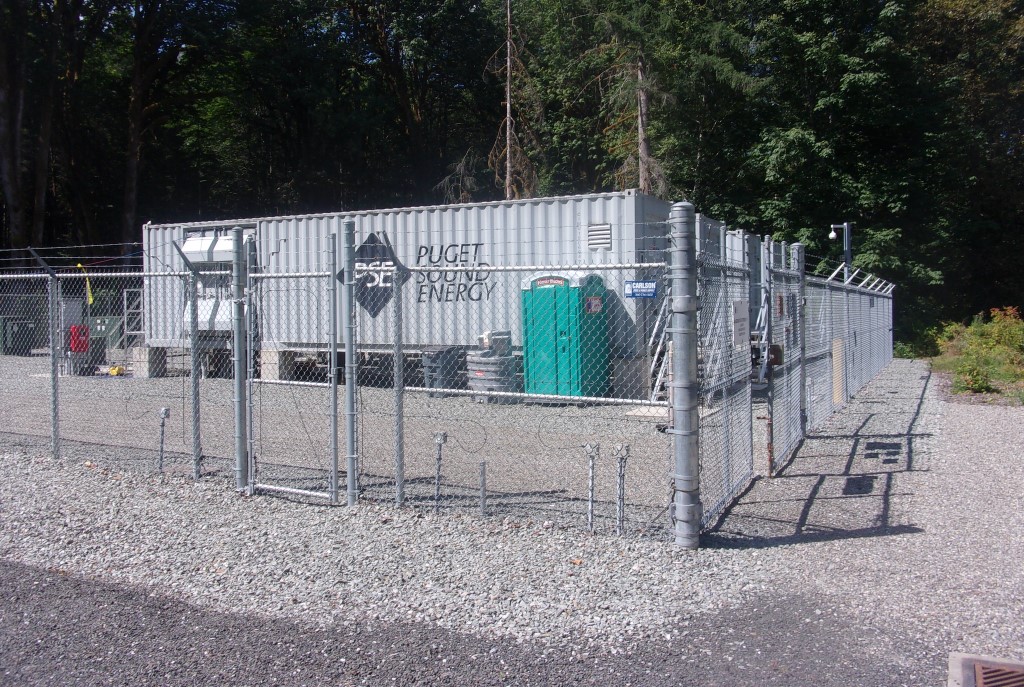
Preview Image: Storage Batteries at Substation in Glacier, Washington