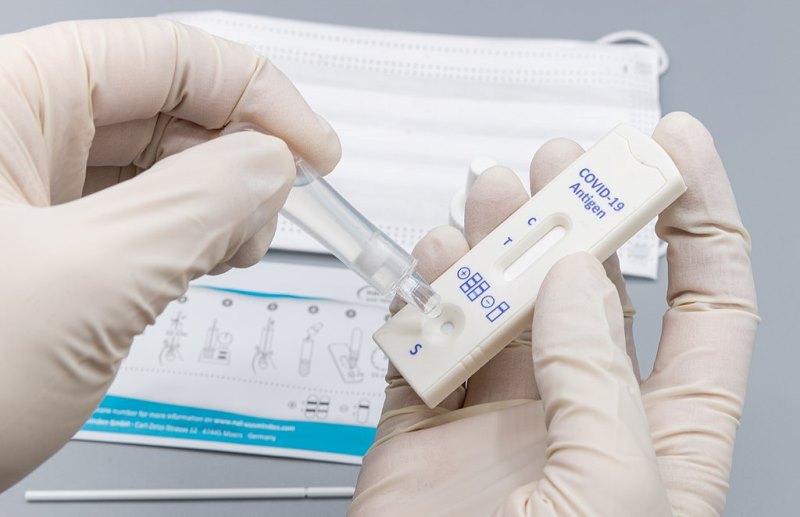
If random swabbing by health workers traces COVID-19 spread, scientists at Imperial College London reasoned. Then why not ask the subjects to do the tests themselves. Moreover, self-swabbing by volunteers could ‘eliminate bias from health service performance, test availability and test-seeking behaviors’. It could also be worth a shot, because it would help protect the health workers from infection too.
Self-Taken Swabs Tracked the Pandemic’s Hidden Patterns
The researchers first asked 594,000 random UK volunteers to swab themselves, or their children between 1 May and 8 September 2020. Then they found COVID-19 infections fell as low 0.04% in the tested population, after a previous 5% high earlier that year. But infections climbed back up again, to a peak of 0.13% in the final phases of the trial.
As Steven Riley and Paul Elliott poured over their data, they found something particularly interesting. The infection rate towards the end of the trial was highest, at 0.25% among young adults aged 18 to 24. And this was significantly greater than the 0.04% among those aged 65 and older. This discovery reported in Nature.Com on April 23, 2021 lead them down an interesting line of reasoning.
Self-Swabbing By Volunteers Had Revealed a Pattern
The volunteers appeared to have revealed something that might otherwise have gone unseen. This was that increased socializing by younger people probably drove the resurgence.
Now while we may have thought this likely previously, the same tend was not evident from routine health worker surveillance. In fact, their findings underestimated infection rates in younger age groups. So what does this mean, what can we learn from it?
The researchers conclude ‘Representative community sampling … can substantially improve situational awareness. And feed into the public health response even during low infection prevalence.’ Self-swabbing by volunteers could also relieve health workers from repetitive duties. And release them for other community health tasks.
Related
The Coronavirus Infects the Cells of the Mouth
First COVID-19 Self-Test Approved By FDA
Preview Image: Safe Corona Rapid Test