

Aqueous zinc batteries are a promising candidate for fast-charging energy storage. That’s because they promise high density at low cost. However, they have not made it market to any significant extent, owing to their unstable chemistry. Now finally Chinese researchers have found the equivalent of a spoonful of sugar stops aqueous dendrites forming.
How Could a Spoonful of Sugar Prevent Aqueous Dendrites?
Aqueous-Zinc batteries have become one of the most promising alternatives for electric car batteries. Because they are safe, with non-flammable electrolytes according to Mining.Com.
Moreover, study author Meinan Liu explains “The zinc battery anode has a super-high theoretical capacity. And this makes it a candidate for future energy storage in the power grid.” Meinan Liu is an associate professor of nanotechnology and nano-bionics at the University of Science and Technology of China.
However, there is one drawback, she continues. Dendrites begin to form when the zinc iron concentration on the anode surface drops to zero. This “impairs electrochemical performance. and poses a serious threat to safe operation”. These dendrites can eventually penetrate the separator and short circuit the battery.
Is This a Sweet Solution To a Pressing Problem?
Previous attempts to suppress dendrites failed, because they also reduced ionic conductivity allowing ions to shuttle between electrodes. Then a collaborative research team from various Chinese institutions tried a radical new approach.
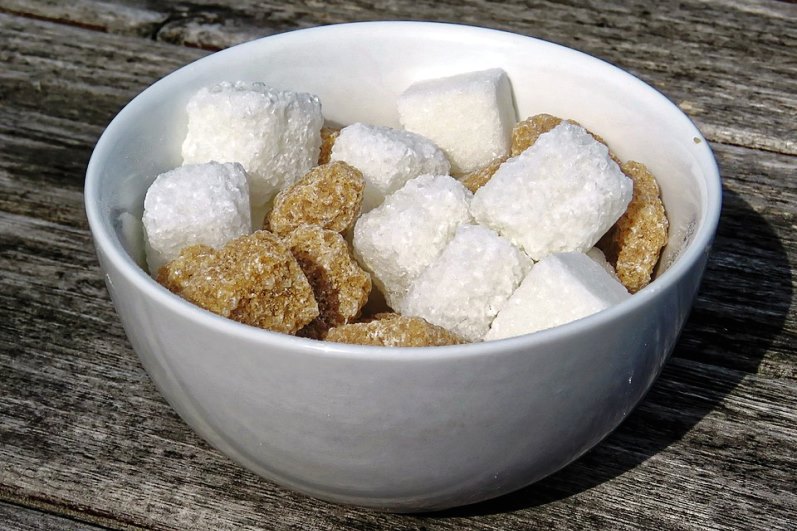
They introduced regular table sugar with multiple hydroxyl groups (hydrogen and oxygen bonded together) into the electrolyte, to adapt the solvation structure. This adapted chemical associations at nano-scale level, and halted dendrite growth without compromising stability.
We’re not sure what sparked this particular flash of inspiration. However, the researchers do believe they now have a good candidate for power grid storage. They hope they are closer to achieving a safe, green, high-performing zinc battery, and so do we.
Breaking News
Is Recycling Electric Vehicle Batteries Feasible
DOE Loan for Graphite Processing Announced


