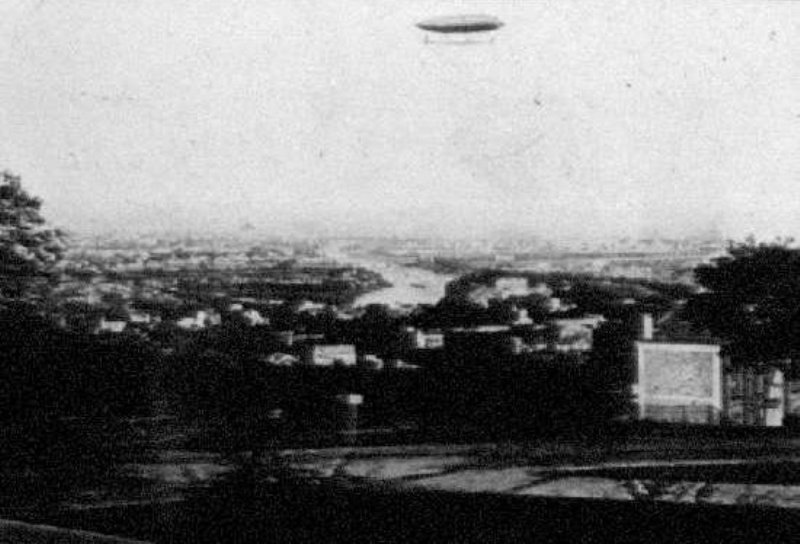
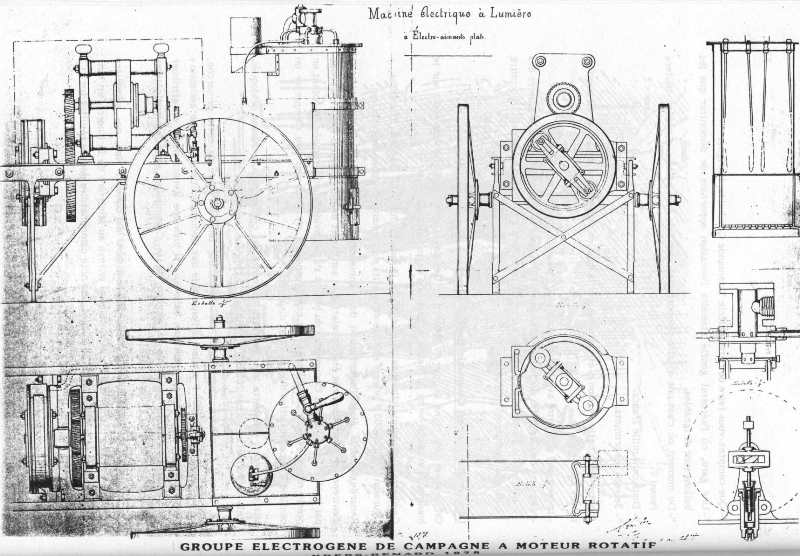
Flow batteries store their chemicals in external tanks, and circulate them through their cells when a device draws their energy. A zinc chlorine flow battery may have been the first working example of this technology. That’s because we know a Frenchman Charles Renard used one to power his airship La France in 1884. And his kit included an onboard chlorine generator.
The First Airship with a Zinc Chlorine Flow Battery
The La France was essentially a large, navigable balloon, containing sufficient hydrogen gas to neutralize the force of gravity. It had a propeller at the front of its control module to draw it forward, and a rudder at the rear to steer it. This long basket beneath the envelope also contained the motive equipment and the crew accommodation.
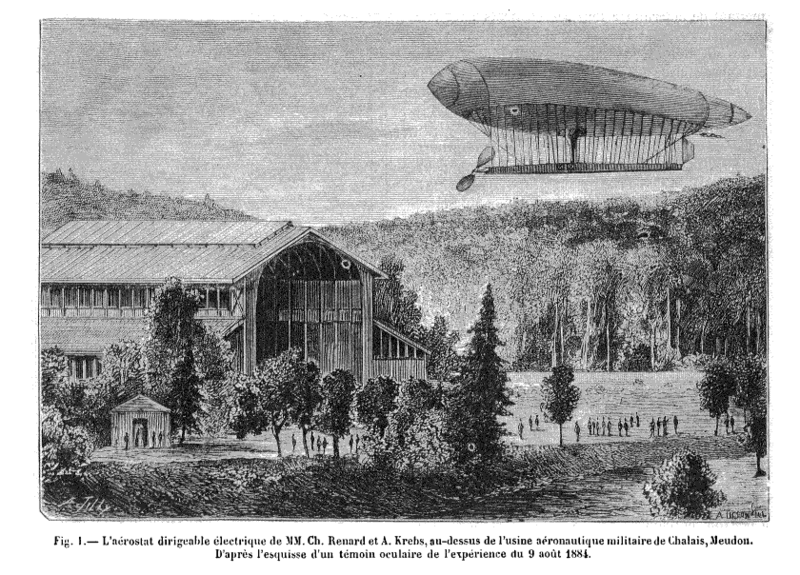
The scale of the enterprise was immense by contemporary standards. The balloon was 170 feet long, by 27 foot diameter at the widest point. It contained 65,000 cubic feet of hydrogen gas. None the less, it did contrive to carry Renard and his companion through the air for 7.6 miles, at a maximum speed of 14 miles per hour.
The Miracle of Powered Flight Through Renard’s Eyes
Flying through the air on the power of the world’s first zinc chlorine flow battery must have been quite some experience! This Day in Aviation cites Renard saying “As soon as we had reached the top of the wooden plateaus which surrounded the valley of Chalais, we started the screw and had the satisfaction of seeing the balloon immediately obey it, and readily follow every turn of the rudder.”
“We felt we were absolutely masters of our own movements,” Renard continued. “And that we could traverse the atmosphere in any direction as easily as a steam launch could make its evolutions on a calm lake …
“The screw was then slowed down, and at a pull of the safety valve started the descent, during which, by means of the propeller and rudder, the balloon was maintained directly over the point where our assistants awaited us. Everything occurred according to our plan, and the car was soon resting quietly upon the lawn from which we had started.”
More Information
Tissandier and Chromate Acid Cells Fly
Sizeable Applications Suit Flow Batteries