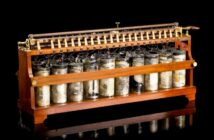
The chromate acid cells we also call bichromate of potash batteries, were a great innovation when Poggendorff and Fuller contrived them in the mid-nineteenth century. But were they any practical use beyond laboratory research? In this instance Gaston Tissandier and chromate acid cells made a great combination, because they powered the first electric flight.
Gaston Tissandier Was a Born Innovator
Gaston Tissandier was a born innovator who escaped the Siege of Paris in a hot air balloon in 1870. However, his real fame came from his meteorological skills, but also from establishing La Nature Magazine.
Tissandier made his first balloon flight in 1868, when he drifted out across the ocean. And then ascended higher to where an air stream returned him in the opposite direction. A brave man indeed!
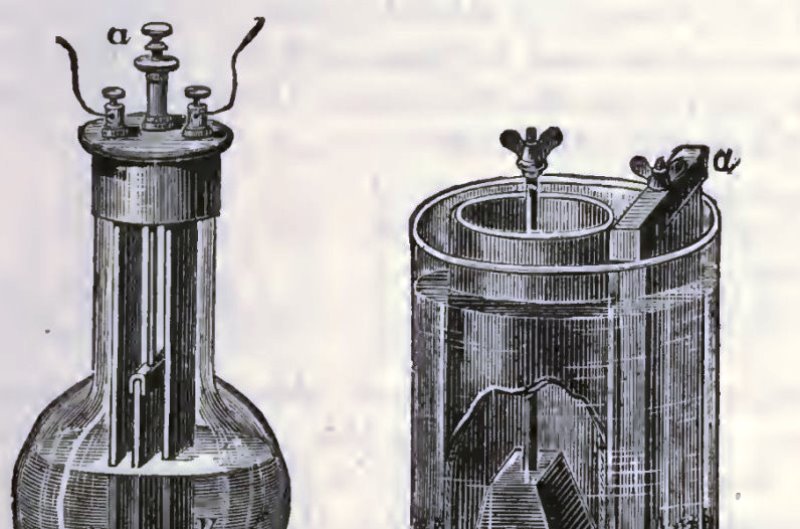
We don’t know what brought Tissandier and chromate acid cells together, but they must have fired his imagination. Because by then Siemens had designed a one-and-a-half-horsepower electric motor. And this stretched electricity’s boundaries beyond street lighting and telegraphy.
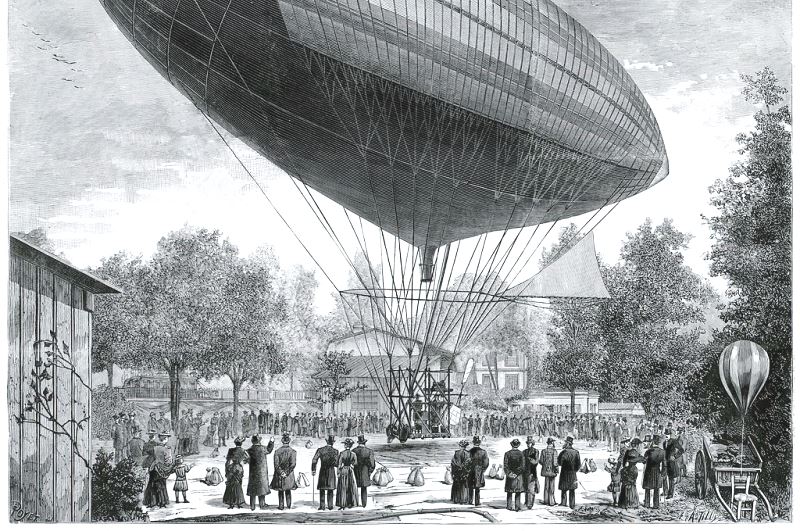
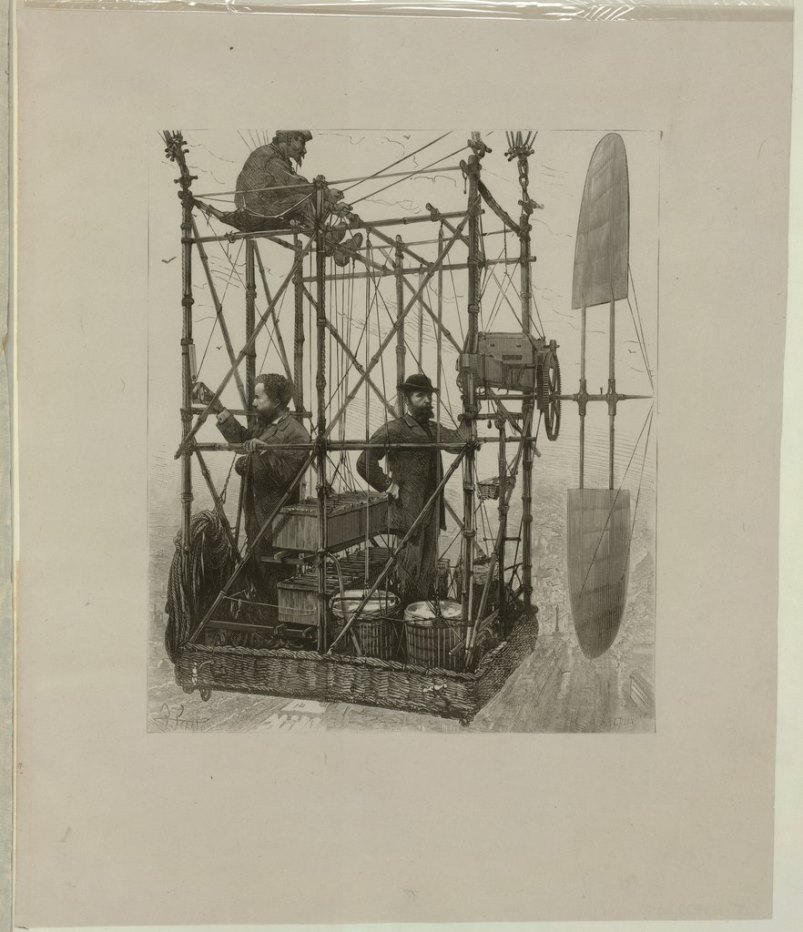
Perhaps Tissandier’s catalyst was earlier work by innovator Jules Henri Gillard. Because that inventor successfully powered an airship with a three-bladed propeller in 1852. Although in this instance his motive force was a three-horsepower steam engine. But Tissandier knew better, as this image shows!
Tissandier and Chromate Acid Cells Team Up
Tissandier’s aeronautical exploits had a mixed history of failure and success. We mentioned his 1870 adventure earlier. Then in 1875 he ascended to an astounding 8,500 feet. However, he was not in full control of the situation, and his two companions died from lack of oxygen. Tissandier himself survived, but was profoundly deaf.
Our deep dive into history reaches a climax when Tissandier and chromate acid cells teamed with a Siemens electric motor, and made the first electric-powered flight. So much would follow, not the least journeys into outer space. However, this was beyond the imagination of those rapturous crowds, that welcomed him back to earth that day in 1883.
More Information
The Poggendorff Cell on the Sidelines