We are always on the hunt for innovative ways to store energy. The pressure is growing for more electric cars running on renewable power, and we must do something soon. However, the idea of storing energy in heat is by no means new. In fact, Edward Alfred Cowper invented the regenerative hot blast stove back in 1857.
Loading Energy into a Super-Heated Hot Blast Furnace
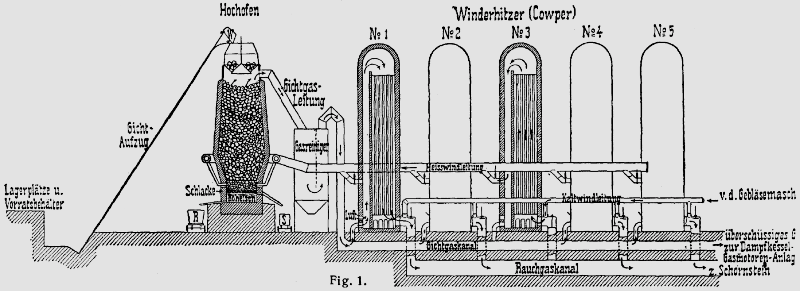
Edward Alfred Cowper’s stove soon became the blast furnace that provided impetus to the industrial revolution. He first stored heat from a furnace in a firebrick-lined vessel, with multiple chambers. And then he blew hot air through the chambers into another furnace, reducing coal consumption by over 35% according to Wikipedia.
Cowper’s method for storing energy in heat, is a close relative in our world of batteries. Quite incredibly, modern blast furnaces achieve temperatures close to 3,000 degrees fahrenheit. CNN News equates this to “100 megawatts of heat energy for about 20 minutes”, and it could recur every hour for 30 years.
A New Start-Up Has Begun Storing Energy in Graphite Blocks
Andrew Ponec may, or may not have heard of his ancestors warming their caves with hot rocks from their cooking fires. Whatever the case, he was able to show CNN News his hot rock thermal battery the other day. “It is nearly 3,000 degrees fahrenheit, he explained, “Hotter than the melting point of steel.”
However, Ponec is way ahead of Cowper in terms of his energy source. That’s because he is using solar energy to heat his graphite blocks, as opposed to burning tons of coal. “People sometimes feel like they’re insulting us by saying, hey, that sounds really simple,” he laughs. “And we say, ‘no, that’s exactly the point.”
Factories using smelters – and other high-heat processes – tend to operate around the clock to avoid re-heating their equipment. If they stored their heat in graphite during daytime instead, then they could operate them off-grid during peak. And achieve savings that their customers could share.
More Information
Heat Batteries and Time for Another Look
Joule Heating Battery Waste for Recycling
Preview Image: See Video Share Link