Schiphol Airport in Holland is one of the world’s busiest terminals, with over 60 million visitors and 400,000 air transport movements annually. The Next Web site reports the airport is trialing iron flow batteries. These store and release energy through electro-chemical reactions, and are well-suited for long-duration stationery storage.
How Iron Flow Batteries Work – The Basics
These electro-chemical devices follow redox flow principles of two tanks. Each of these contains an electrolyte of iron salts dissolved in water. These liquids circulate separately. But as they do so, they pass a single membrane, through which their ions exchange.
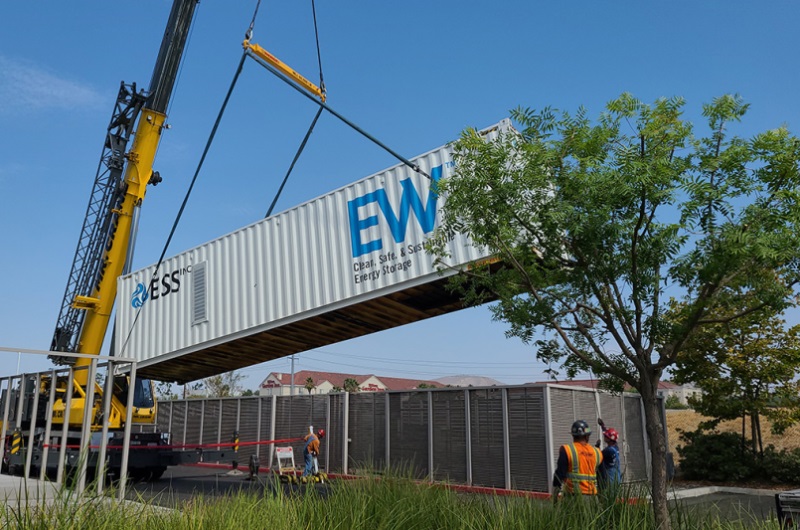
Recharging a flow battery is as simple as replenishing the electrolyte. Their storage capacity is only limited by the size of their tanks. Although in practice these batteries are no larger than containers to facilitate transport. However, for a variety of reasons, iron flow batteries have been on the back burner for decades.

Iron Batteries Flow Forward To A Fresh Start
A new entrant to the market believes that iron flow technology should be cheaper than other alternatives for storing solar and wind power. The Next Web explains how it is trialing this technology at the airport, where it delivers electricity to parked airplanes.
The background to this experiment harks back to the early 1980’s. This was when Case Western Reserve University developed the first iron redox flow battery. However, oil was cheap back then, and there were no takers for bulk energy storage batteries.
This situation has changed rapidly on the back of global warming. The energy landscape is evolving rapidly, and renewables require temporary storage. This startup appears to be aiming four-square for the gap. We shall watch this one with interest, because it appears to be the only active one in this market.
More Information
Earth-Abundant Iron-Based Flow Batteries