Scientists researching the dawn of practical magnetism and electricity, must have dreamed of functional uses for their inventions. Especially as an increasing number of heavy wagons pulled by draught animals began feeding the industrial revolution. The first practical electric vehicles were little more than toys. But this was not the end of human inventiveness, not by a long shot!
First Electric Vehicles Were Scaled-Down Prototypes
The first experiments were really just small models, by the likes of Polish priest Ányos Jedlik in 1828. His innovation ran on his famous two-fluid batteries separated by clay, and later impregnated paper.
Some three decades later Robert Anderson invented a simple electric carriage, that ran on single-use, non-rechargeable galvanic cells.
Thomas Davenport took the next step by building a short, circular, electrified track for a similar carriage. However, the first practical electric vehicles for rail use, had to wait for Robert Davidson’s 1827, fully electric battery locomotive.
Davenport was making such good progress that railway workers saw the electric engine as a threat to coal power. They destroyed the electric locomotive, and with it his hopes and dreams.
The Arrival of the First Full Scale Electric Car
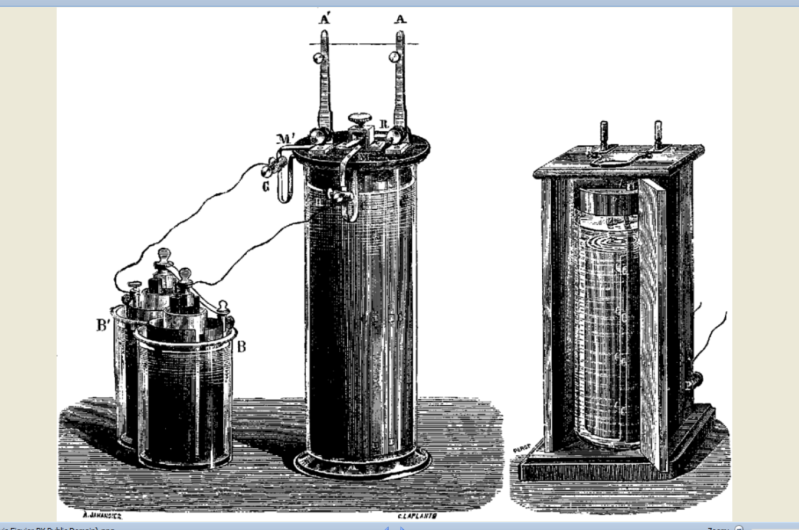
The first electric car arrived in 1859, thirty-two years after the destruction of Thomas Davenport’s pioneering locomotive. By then Gaston Planté’s rechargeable lead-acid battery was showing promise, although it would take Camille Faure to make it really practical.
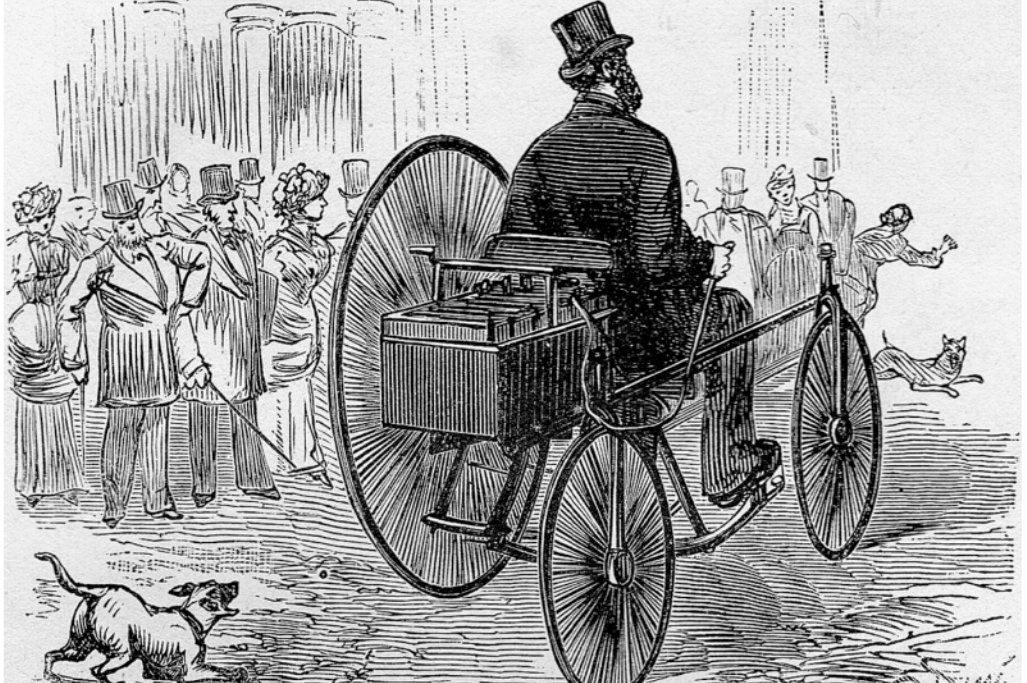
Another Frenchman, Gustave Trouvé was full of ideas. First, he improved the latest Siemens electric motor. Then he fitted Camille Faure’s lead-acid batteries into James Starley’s tricar, and was soon cruising the streets of Paris. The first electric car was born!
More Information
Camille Faure Creates Lead-Acid Batteries in 1881