There are plans afoot to begin recovering and recycling EV batteries in Guangdong Province, China. The chosen site will be at the New Energy Circular Economy Zero-Carbon Smart Industrial Park there. This is a significant step forward, for an activity which is struggling to gain international traction.
The Guangdong go-ahead follows an environmental impact assessment, and information disclosure according to the Shanghai Metals Market (SMM) website. The project will meet the standards of a ‘zero-carbon park green factory’, SMM continues. And this will include a new-type ‘energy storage system intelligent manufacturing center’.
The specification includes an annual processing capacity of 60,000 metric tons of scrap, and end-of-life EV lithium-ion batteries. Hubs will include a comprehensive utilization and dismantling center; a carbon neutrality research institute, and supporting living facilities.
Recovering and Recycling EV Batteries Is Overdue
Lithium-ion batteries play a critical role in electric transport, and with that, advancing the overall sustainability program. In fact, many other green projects, including renewable energy, rely on lithium-ion batteries too.
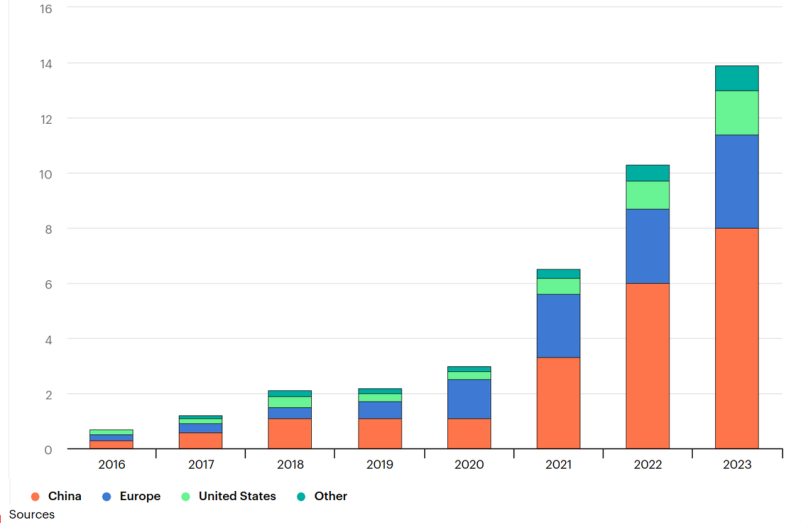
EMEW Clean Technologies confirms ‘a 50-fold increase in the sale of EV cars between 2012 and 2022’, and the trend is continuing. In fact, global sales may double in the next five years, compounding the EV battery recycling backlog. Recovering and recycling EV batteries is therefore indeed overdue!
Circular Energy Storage confirms the magnitude of this growing problem. Because, they say, ‘lithium battery production has a scrap rate of 10% to 30% across the various production processes in gigafactories’. And this waste accounts for “more than 60% of existing battery scrap”.
Surge of Spent EV Batteries and Scrap is Building
Electric transport is still in its relative infancy, having only really taken off in the past five years. This means that the oldest EV batteries will become due for recovering and recycling in ten years time. After that, millions of spent batteries will begin piling up for repurposing or scrapping every year.
Pulling the threads together, we begin to understand how recovering and recycling EV batteries has become such a critical factor for the green movement. The Guangdong project is an important trail blazer in this regard. And for that, we thank them.
More Information
Lithium Battery Recycling For The Environment
New Battery Recycling Standard in China
Preview Image: Electric Vehicle Sales 2016 to 2023