Where would we be without roast potatoes with the Sunday lunch and crispy chips with our southern fried favorites? They are an excellent source of vitamin B6. They also provide potassium, copper, vitamin C, manganese, phosphorus, niacin, dietary fiber and pantothenic acid. That’s potato power.
What You Need to Harness Potato Power

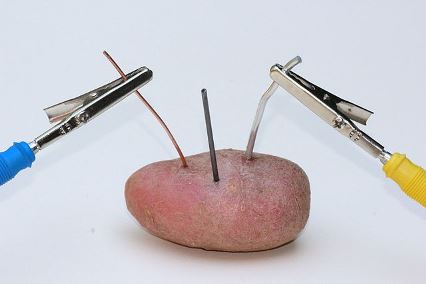
Their moist nature means potatoes have the potential to make batteries too, but not powerful enough for electric cars. For this project, you require 2 raw potatoes you mark ‘one’ and ‘two’ respectively, and 2 pieces of thick copper wire.
You also need two galvanized nails, and three lengths of insulated wire with crocodile clips at each end.
How to Assemble Your Potato Clock
Silly me, I almost forgot the clock. This must be a low voltage LED type using a one to two-volt button battery (when not on potato power). To get started, remove the battery noting how the negative and positive terminals connect. Then push one galvanized nail into each potato, follow by the pieces of copper as far away as possible. Assemble the 3 lengths of insulated wire as follows:
- Connect the positive terminal to the copper wire in potato one
- Join the negative terminal to the galvanized nail in potato two
- Connect the nail on potato one to the copper wire in potato two
The clock should start right away. Once you set the correct time, the electrochemical potato power will do the rest.
The World of Science behind Potato Power
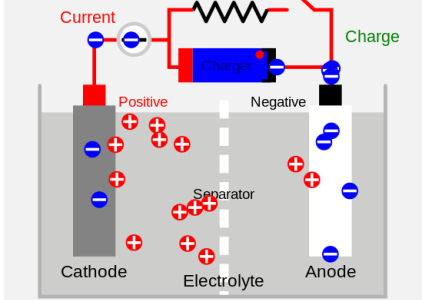
The galvanized nail is the negative anode. The copper wire is the positive cathode. The potato is the electrolyte that keeps them apart, but allows electron transfer between them. To make more power, join more batteries. The volts would aggregate, but high resistance in potatoes makes this a science, not a commercial project.
Related