For many decades, we put our used batteries in the trash, and they ended up in landfill. Then we got smarter, and began recycling batteries to recover their materials. Current methods break down their electrodes completely, and so we are back to the raw materials. But now scientists at Cornell University suggest, try washing the contamination off battery electrodes instead.
A More Efficient Way to Recover Battery Electrodes
The two scientists at Cornell developed a cost-effective way to rejuvenate the active materials in spent battery cells. Washing contamination off battery electrodes their way, refreshes them, and they recover up to 95% of their original power.
What’s more, the refreshed electrodes last longer next time, which is an added bonus. The new method is also more cost-effective. It cuts battery recycling costs by over 50%,and is more environmentally responsible too.
Alternative Ways to Deal With Battery Contamination
The old method was akin to make, use, and throw away. Discarded batteries rotted away in landfills, until they released their chemicals and polluted our soil and water. But then we realized we should recycle the billions of used lithium-ion batteries instead, because their electrode materials are expensive, and in relatively short supply.
The methods we still use at recycling plants, smash the old batteries up, and apply toxic chemicals to recover the raw electrode materials. But this is expensive, and difficult to cost justify.
Folk in North America and Europe needed a better method, because they do not have enough lithium locally that they could mine. The Cornell University team decided there was only way out. They had to find a way to recycle electrodes that was affordable and environmentally responsible.
Washing Contamination Off Battery Electrodes at Cornell
Their method is elegantly simple. They remove the electrodes from used batteries, complete with their current collectors. Then they place these in a bath of a special solution.
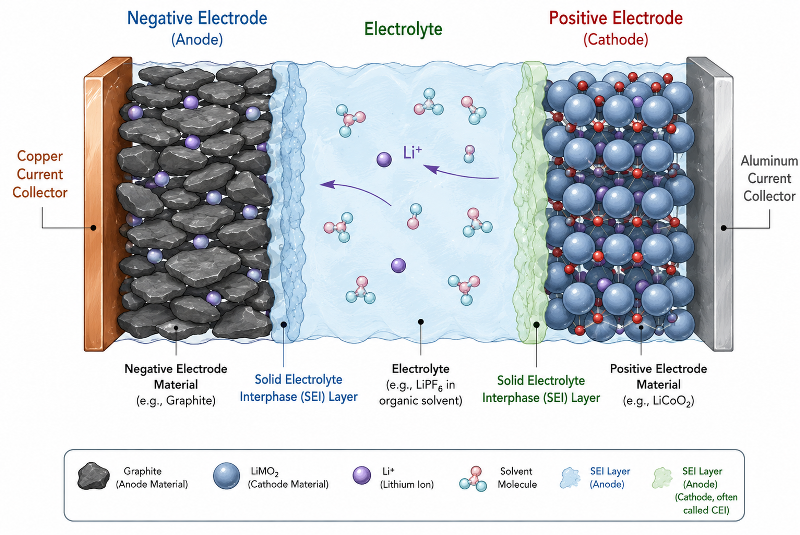
This solution dissolves away the SEI solid electrolyte interphase layer, that forms on lithium-ion battery electrodes when they contact the electrolyte during normal use. Washing contamination off battery electrodes in this way, repairs them. They are then ready for reuse in new batteries.
More Information
Solid–Electrolyte Interphase – Dramatic News
SEI Layer Role in Lithium Metal Battery Life